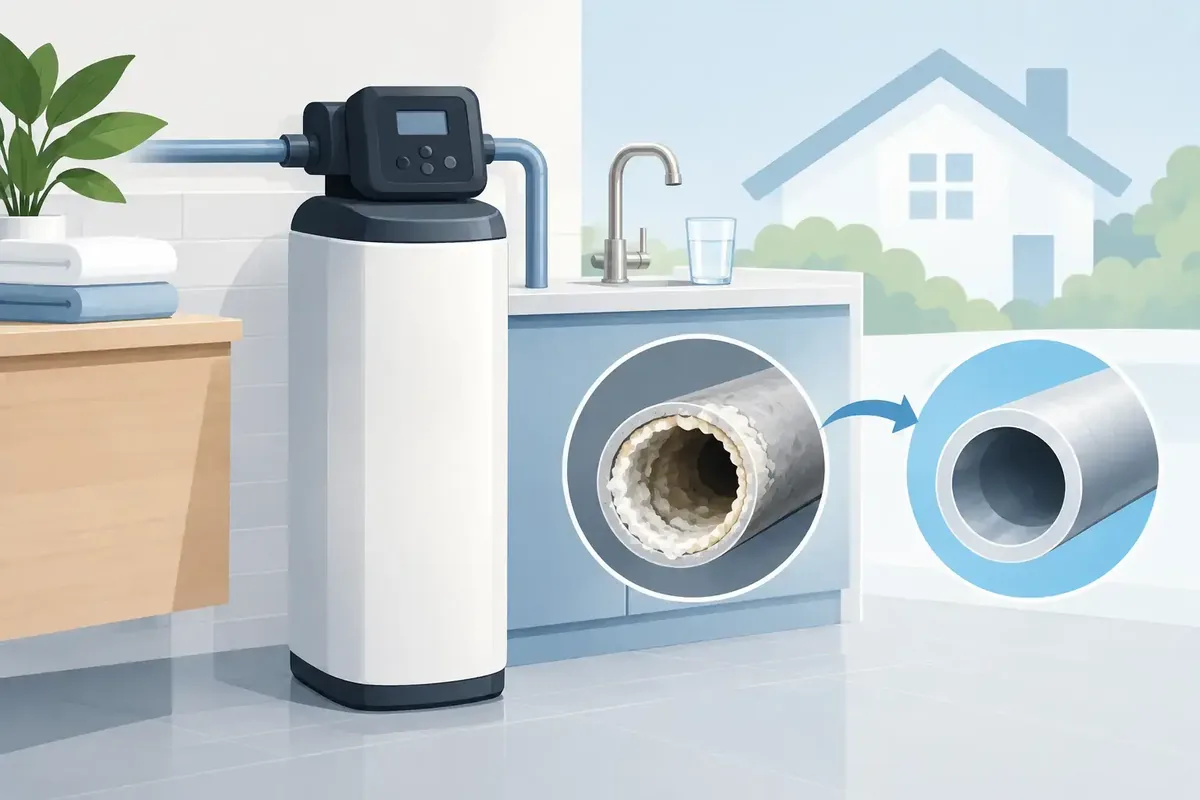
That white, chalky ring around a faucet is more than a cleaning nuisance. It is a visible sign of minerals in your water, and those same minerals can collect inside shower valves, water heaters, fixtures, and appliances. Water descalers are one option for Middle Tennessee homeowners who want to limit scale buildup without adding salt to their water.
Before choosing any water treatment system, it helps to understand what a descaler can do, what it cannot do, and whether your home may be better served by a traditional water softener or another filtration solution.
What Are Water Descalers?
Water descalers are systems designed to reduce the way hardness minerals stick to plumbing surfaces. Hard water typically contains calcium and magnesium. Those minerals are safe to drink, but they can leave deposits behind when water dries or is heated.
Unlike a conventional water softener, a descaler does not usually remove calcium and magnesium from the water. Instead, it changes the behavior or structure of those minerals so they are less likely to form hard, stubborn scale inside pipes and equipment.
Many salt-free systems use a treatment media that encourages minerals to form tiny crystals. The minerals remain in the water, but they are less likely to attach to the heating elements in a water heater or the interior of a tankless unit. Other products use electronic or magnetic methods. Results can vary by water chemistry, flow rate, and the specific product installed.
That distinction matters. A water descaler is primarily a scale-management tool, not a complete hardness-removal system.
Why Scale Buildup Matters in Middle Tennessee Homes
Hard water can quietly add wear to plumbing equipment over time. Water that looks clear at the tap may still leave mineral deposits in the areas you cannot easily see.
Inside a conventional tank water heater, sediment and scale can settle or collect near the bottom of the tank. This may contribute to popping or rumbling sounds, slower recovery, and reduced efficiency. Tankless water heaters are especially sensitive because their heat exchangers have narrow passages that need regular flushing when mineral content is high.
Scale can also affect showerheads, faucets, dishwasher components, ice makers, humidifiers, and washing machines. You may notice spots on glasses, rough-feeling laundry, reduced spray from a showerhead, or frequent cleaning around fixtures. Those symptoms do not always mean a major plumbing failure is ahead, but they are worth addressing before they become expensive equipment problems.
For landlords and commercial property operators, the issue can multiply quickly. Several water heaters, tenant fixtures, or break-room appliances can mean more maintenance calls and more downtime when scale is not managed.
How Water Descalers Compare With Water Softeners
A descaler and a water softener solve related problems, but they do not produce the same result. Choosing between them should be based on your water test, your goals, and the equipment you are trying to protect.
A traditional ion-exchange water softener removes hardness minerals and replaces them with sodium or potassium. This approach can significantly reduce spotting and scale while improving the feel of water for bathing and laundry. It does require salt or potassium, periodic maintenance, and a drain connection for regeneration.
Water descalers are often appealing because they are salt-free and generally require less routine attention. They do not need regeneration cycles, do not add sodium, and may be a good fit for households that want scale protection without the ongoing task of adding salt. Depending on the system, a descaler may still need replacement media after a set number of years.
The trade-off is simple: a descaler does not make hard water soft. If your main concern is protecting a water heater or limiting scale in pipes, it may be a sensible choice. If you want softer laundry, less soap use, reduced spotting, and a noticeable change in how the water feels, a water softener is usually the better match.
When Water Descalers May Be a Good Fit
A water descaler may be worth considering if your household wants a lower-maintenance, salt-free approach to scale control. It can be particularly practical for homeowners with moderate hardness who are focused on extending the life of a tankless water heater, dishwasher, or other water-using equipment.
It can also make sense where space is limited. Some descaling systems have a smaller footprint than a full softener setup, though every installation still needs a proper location, shutoff valves, and access for future service.
A descaler may also be part of a broader water-quality plan. For example, a home may need sediment filtration to protect equipment from grit, carbon filtration for chlorine taste or odor, and scale treatment to help protect the water heater. The right answer is not always one piece of equipment.
Still, do not choose a system based only on an advertisement or a neighbor's experience. Two homes on the same street can have different water demands, plumbing layouts, and equipment needs. A water test and an honest review of your goals should come first.
Situations Where a Water Softener May Be Better
If you are tired of heavy spotting on dishes, soap scum in showers, stiff laundry, and frequent mineral crust on fixtures, a softener may provide a more noticeable improvement. Because it removes hardness minerals rather than simply conditioning them, it is often the stronger option for homes with very hard water.
A softener may also be the better investment if multiple people live in the home, water use is high, or expensive appliances are already showing scale-related trouble. Households with a tankless water heater can benefit from either solution depending on water hardness, but a softener may reduce the frequency and severity of mineral-related maintenance.
There are valid reasons some homeowners prefer to avoid salt. Health concerns, personal preference, space limitations, and maintenance habits all matter. A qualified plumbing professional can explain the choices clearly without pushing a one-size-fits-all system.
Installation Details That Should Not Be Overlooked
Even a quality water treatment product can disappoint when it is installed incorrectly. The system needs to be sized for the home's water use, installed in the correct location, and set up to treat the water before it reaches the appliances and fixtures you want to protect.
The main water line is often the appropriate installation point, but the exact layout depends on the home. Outdoor hose bibs may be left untreated in some installations, while water heater connections, irrigation systems, bypass valves, pressure regulators, and existing filtration equipment all need to be considered.
For commercial properties, sizing becomes even more important. A system that works for a single-family home may not be sufficient for a restaurant, office building, rental property, or facility with multiple restrooms and water heaters.
Professional installation also gives you a chance to inspect the surrounding plumbing. Corroded shutoff valves, aging flex lines, poor drainage, or an overdue water heater flush can affect the value you get from a new descaling system.
Maintenance Still Matters
Water descalers can reduce scale formation, but they do not make plumbing maintenance unnecessary. Tankless water heaters may still need periodic flushing. Tank-style water heaters benefit from inspection and sediment management. Faucet aerators and showerheads can still collect debris, especially where water contains sediment or mineral deposits.
Pay attention to changes in water pressure, hot-water performance, unusual water heater sounds, or recurring leaks at fixtures. These problems may be related to scale, but they can also point to worn valves, pressure issues, or aging equipment.
At Angle Stop Plumbing, our team can test your water, inspect your plumbing setup, and recommend a solution that fits your home, budget, and long-term maintenance goals. You should receive clear options and upfront pricing, not pressure to buy equipment that does not solve the problem you actually have.
Start With Your Water, Not a Sales Pitch
The best water treatment decision begins with a clear look at your water quality and your household priorities. If your goal is salt-free scale management, water descalers may offer practical protection for your plumbing and water-using appliances. If you want the full benefits of softened water, a conventional softener may be the wiser route.
A little planning now can help protect the equipment your family relies on every day and make future plumbing maintenance far less stressful.