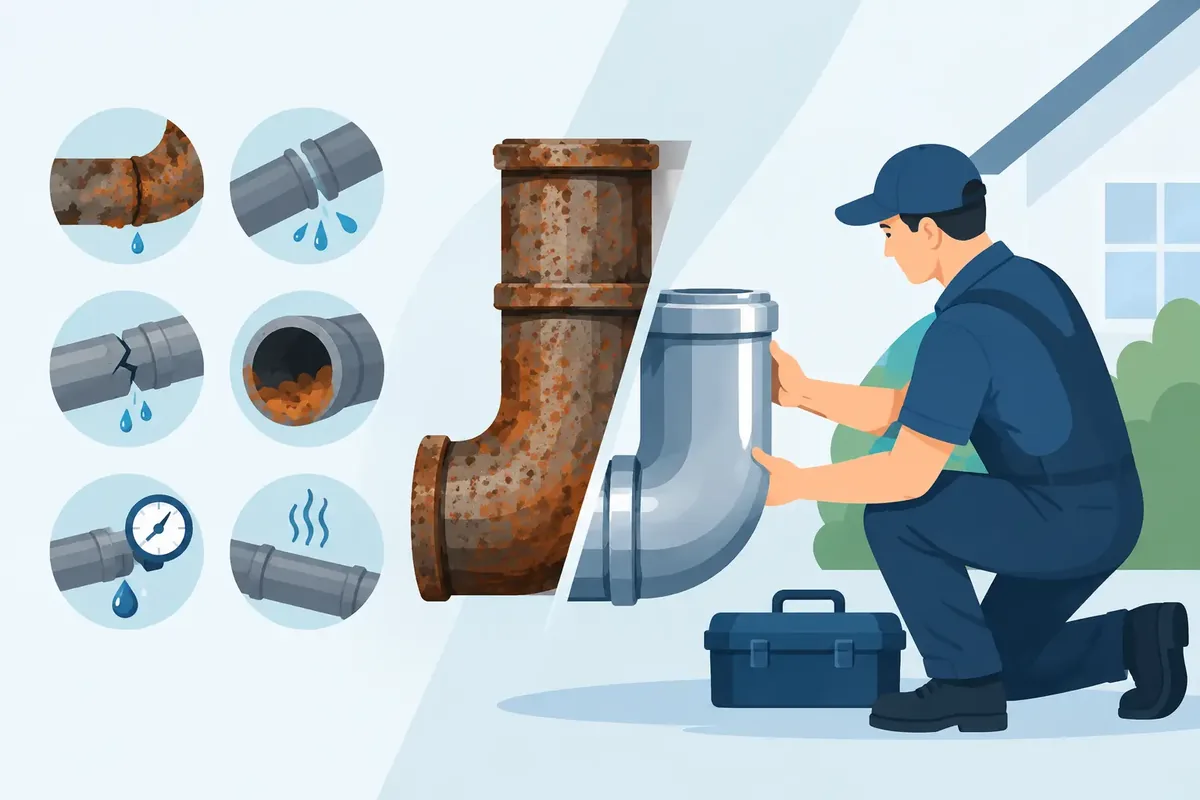
A pipe rarely chooses a convenient time to fail. A small stain behind a washing machine, rusty water at the kitchen sink, or a drain that suddenly backs up can quickly become damaged flooring, disrupted business hours, and an unexpected expense. If you are asking when should pipes be replaced, the answer is usually found in the pattern: recurring repairs, aging materials, declining water quality, or evidence that water is escaping where it should not.
Replacing pipes is a major decision, but it is not always an all-or-nothing project. A careful plumbing inspection can determine whether one damaged section needs attention or whether your home or commercial building is approaching the point where repiping is the wiser long-term investment.
1. You Have Repeated Leaks in Different Areas
One isolated leak can happen in any plumbing system. A loose fitting, a nail through a line, or a failed seal may be repairable without raising larger concerns. But leaks that keep appearing in different rooms or along separate runs of pipe tell a different story.
Older pipes can thin from the inside due to corrosion, mineral buildup, or years of water pressure. Repairing one weak spot may simply move the problem to the next vulnerable section. When repair calls become a regular part of owning the property, ask a plumber to assess the overall condition of the piping rather than treating each leak as unrelated.
Watch for water stains on ceilings or walls, soft flooring, peeling paint, unexplained mildew smells, or a water bill that rises without a change in usage. Even a hidden pinhole leak can cause significant damage over time.
2. Your Water Is Rusty, Discolored, or Metallic-Tasting
Water that comes out yellow, brown, red, or rusty may point to corroding galvanized steel pipes. If discoloration happens only when you first turn on the hot water, the water heater could be the source. If it occurs at multiple fixtures or affects both hot and cold water, the supply piping deserves closer attention.
A metallic taste, visible sediment, or frequent clogged faucet aerators can also signal corrosion or mineral scale inside aging lines. Middle Tennessee water conditions vary by neighborhood and water source, so a plumbing professional should separate a pipe issue from a water-quality issue before recommending replacement.
A filtration or water-conditioning system may improve taste and reduce mineral effects, but it cannot restore pipe walls that have already deteriorated. If corrosion is widespread, replacing the affected piping protects both your water quality and your property.
3. Water Pressure Has Dropped Throughout the Building
Low water pressure at one fixture may be a simple faucet, showerhead, or valve issue. Low pressure throughout the home is more concerning, especially in an older property with galvanized pipes.
Galvanized lines can collect internal rust and mineral deposits until the opening inside the pipe becomes much smaller. Water may still flow, but showers feel weak, appliances fill slowly, and using two fixtures at once becomes frustrating. This restriction cannot be reliably solved by repairing a single fitting.
Before deciding on replacement, have a plumber test the pressure, inspect accessible piping, and rule out issues with the main shutoff valve, pressure regulator, or municipal supply. The right diagnosis matters. Replacing good pipes will not solve a pressure problem caused elsewhere.
4. Your Pipes Are Near or Beyond Their Expected Service Life
Age alone does not automatically mean your pipes must be replaced. Installation quality, water chemistry, maintenance, and past repairs all affect how long a system lasts. Still, knowing the material in your building provides a useful planning baseline.
Copper water lines often last 50 years or longer, though corrosive water, poor installation, or repeated freezing can shorten that life. PEX has a projected lifespan of several decades and is widely used in modern repiping because it resists corrosion and offers flexibility during installation. Galvanized steel may last 20 to 50 years, but many older systems experience internal corrosion well before the upper end of that range. Cast-iron drain lines can also last for decades, yet their interiors may deteriorate, scale, crack, or develop offsets as they age.
If your Murfreesboro-area home was built several decades ago and still has original galvanized supply lines or cast-iron drains, an inspection can help you plan before a sudden failure forces the decision.
5. Drain Problems Keep Returning
Slow drains are not always a pipe replacement issue. Grease buildup, hair, wipes, and tree roots can block otherwise sound drain lines. However, repeated backups after professional cleaning may indicate a deeper problem with the sewer or drain piping.
Camera inspection is especially valuable here. It can reveal cracks, separated joints, sagging sections known as bellies, intrusive roots, heavy scale, or deteriorated cast iron. A pipe that has lost its structural integrity may continue to clog no matter how often it is cleared.
In some cases, a targeted repair or trenchless rehabilitation may be appropriate. In others, replacing a damaged section is the more dependable choice. The best option depends on the pipe material, location, extent of damage, and whether the problem affects a short run or the entire line.
6. You See Corrosion, Flaking, or Damaged Pipe Sections
Take a look at exposed plumbing in basements, crawl spaces, utility rooms, and mechanical areas. Visible rust, white or green corrosion around joints, flaking metal, or dampness on pipes should not be ignored.
Some surface discoloration can be minor, but active corrosion around fittings often means moisture is escaping or the metal is breaking down. Old valves may also become difficult to operate or fail when you need to shut off water quickly during an emergency.
Replacing visibly compromised sections can prevent a much larger leak. If similar deterioration appears throughout accessible areas, it is time to discuss a broader repiping plan and the benefits of updating aging shutoff valves at the same time.
7. You Are Renovating Before Walls and Floors Close Up
A kitchen, bathroom, or whole-home renovation creates a practical opportunity to update aging pipes. Once new tile, cabinetry, drywall, or flooring is installed, accessing old plumbing becomes more disruptive and expensive.
This does not mean every renovation requires repiping. Newer copper or PEX pipes in good condition may only need minor adjustments for the new layout. But if the walls are open and the existing pipes are corroded, undersized, poorly routed, or near the end of their useful life, replacement is often the prudent choice.
For commercial property owners, planned upgrades can reduce disruption to tenants, staff, and customers. Scheduling pipe work during a remodel, slower season, or after-hours window is often easier than responding to an emergency leak during normal operations.
8. A Professional Inspection Finds a System-Wide Risk
The clearest answer to when pipes should be replaced comes from a complete evaluation, not a guess based on the building's age. A qualified plumber can inspect exposed supply lines, test pressure, look for hidden leaks, assess water quality concerns, and camera-scope drain or sewer lines where needed.
This evaluation should lead to a clear, practical explanation. You deserve to know whether a repair is a reasonable solution, whether replacement can be staged over time, and what materials make sense for your property. Upfront pricing and a written scope help you compare the cost of continued repairs against a lasting solution.
Repair, Partial Replacement, or Whole-Home Repiping?
There is no single answer for every property. A localized leak in newer PEX or copper may call for a straightforward repair. A damaged sewer section invaded by roots may need a targeted replacement. Widespread corrosion, frequent leaks, poor pressure, and old galvanized piping often make whole-home repiping the better value.
Whole-home repiping is disruptive, but a professional crew should take steps to protect your home, limit wall access to what is necessary, communicate clearly about the schedule, and restore service as efficiently as possible. It is also an opportunity to improve pipe sizing, add convenient shutoff valves, and address connections to water heaters, fixtures, and filtration equipment.
For families and property managers, the goal is not to replace pipes early without reason. It is to avoid letting a predictable aging problem turn into water damage, lost time, and stress. Angle Stop Plumbing can inspect your system, explain the condition in plain language, and help you choose a repair or replacement plan that respects your property and budget.
If you have noticed recurring leaks, rusty water, weak pressure, or stubborn drain backups, do not wait for a pipe to fail at the worst possible moment. A timely inspection gives you the information to act calmly, protect the people who rely on your building, and make a decision with confidence.