A water heater usually gets attention only when the shower turns cold, the utility bill climbs, or water appears around the tank. But if your current unit is nearing the end of its service life, a hybrid water heater review is worth reading before you make a rushed replacement decision. For many Middle Tennessee households, a heat-pump or hybrid unit can provide dependable hot water with significantly lower operating costs. It is not the right fit for every home, though, and the details matter.
What Is a Hybrid Water Heater?
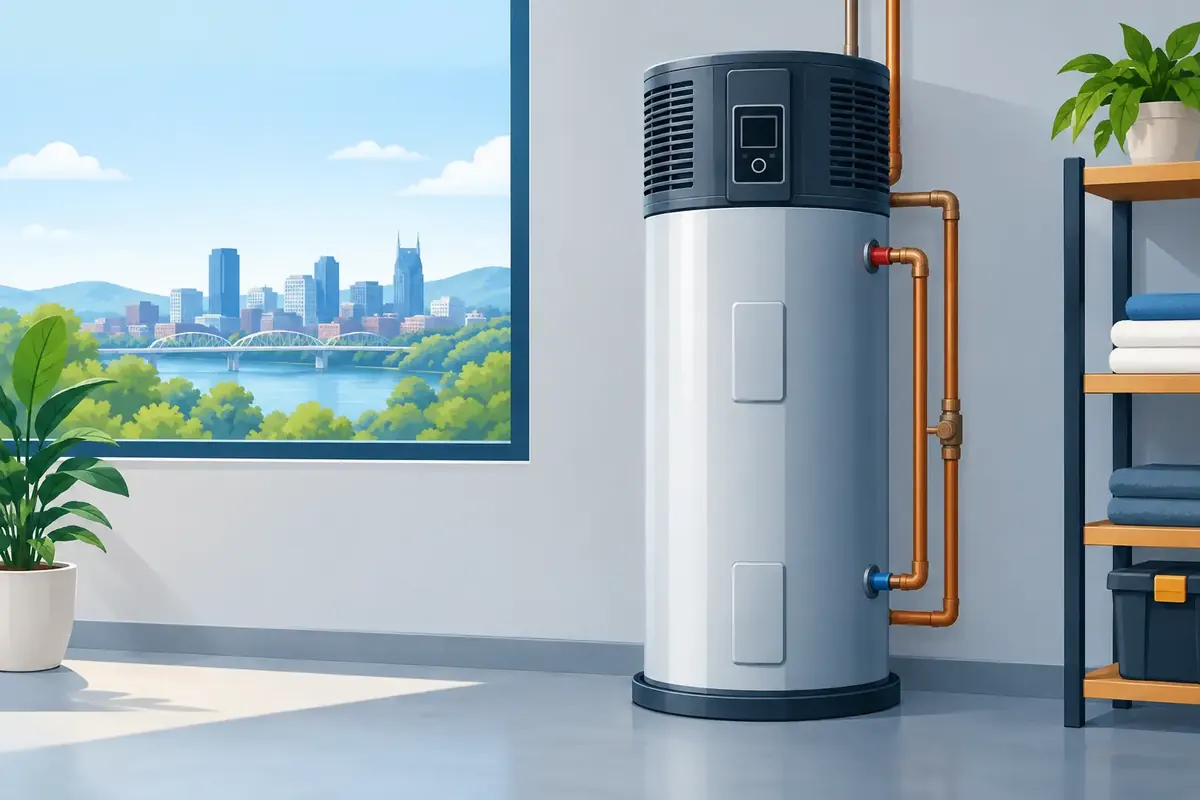
A hybrid water heater is a storage-tank water heater that uses a heat pump as its primary heating source. Instead of relying only on electric heating elements, it pulls warmth from the surrounding air and transfers that heat into the water in the tank. Think of it as moving heat rather than creating all of it from scratch.
Most models also include electric resistance elements. Those elements can take over when your family needs hot water quickly, such as during several back-to-back showers, a full load of laundry, and a dishwasher cycle. This combination is why these units are called hybrid water heaters.
Typical operating modes include an efficiency-focused heat-pump setting, a high-demand setting that uses the elements more often, and vacation settings for homes that will be empty for a while. The right setting depends on the household, not just the equipment label.
Hybrid Water Heater Review: The Benefits That Matter
The biggest advantage is efficiency. A standard electric tank uses electricity to generate heat directly. A hybrid model uses electricity to run a heat pump that collects existing heat from the air. As a result, it can use far less electricity than a conventional electric water heater.
For a family that uses a meaningful amount of hot water, that difference can reduce monthly utility costs over the life of the appliance. Savings vary based on electric rates, household size, water use, installation location, and the temperature of the room around the unit. Still, hybrid systems are often among the most efficient tank-style water-heating options available.
They also retain the familiar benefits of a tank water heater. There is stored hot water ready for use, and the basic service approach is familiar to experienced plumbers. Homeowners who do not want the changes involved with a tankless conversion may find a hybrid unit to be a practical middle ground.
Another benefit is dehumidification. Because the heat pump pulls warmth and moisture from the air, it can make a humid garage, basement, or utility space feel drier. In the right location, that can be a welcome side effect during Middle Tennessee's warmer, humid months.
Many homeowners may also qualify for utility incentives, manufacturer promotions, or tax credits depending on current programs and equipment requirements. These programs change, so it is wise to verify availability before making a buying decision rather than building your budget around an assumed rebate.
The Trade-Offs You Should Know Before Buying
Efficiency does not erase every consideration. Hybrid water heaters need enough air around them to operate well. A cramped closet may not provide the needed airflow, and a small interior space can become cooler while the unit runs. That may be useful in a garage but less desirable in a conditioned living area.
They also make noise. The sound is often comparable to a refrigerator, fan, or dehumidifier, but it is not silent. Placement matters. A unit beside a bedroom, home office, or quiet living area deserves a conversation before installation.
Initial equipment and installation costs can be higher than those of a basic electric tank. The long-term energy savings may offset that added cost, especially for households with regular hot-water demand, but the payback period differs from home to home. A smaller household that uses very little hot water may see a slower return than a busy family with several bathrooms.
Drainage is another practical issue. Like an air conditioner, a hybrid unit produces condensate. It needs a proper drain path or condensate pump. A professional installation should account for this from the start, along with the electrical circuit, expansion tank requirements, shutoff valves, drain pan, and local code considerations.
Finally, cold locations can affect performance. A heat pump water heater works best where temperatures remain moderate. An unconditioned garage can still be a good option in Middle Tennessee, but the unit may rely more heavily on electric elements during colder spells. That does not make it a poor choice. It simply means the installation location and operating expectations should be realistic.
Is a Hybrid Unit Right for Your Home?
A hybrid water heater is often a strong fit for homeowners replacing an aging electric tank, especially if the existing unit is located in a garage, basement, utility room, or other space with adequate air volume. Families with consistent hot-water use tend to benefit most because they have more opportunity to realize energy savings.
It can also make sense for landlords who want to lower operating costs in an all-electric property while providing tenants with a familiar tank-style hot-water system. For commercial properties, the answer is more dependent on demand patterns, available space, recovery requirements, and operating hours. A small office may have very different needs from a restaurant, salon, or multifamily property.
A hybrid system may be less attractive if the water heater sits in a tiny enclosed closet, if the surrounding room must stay warm year-round, or if the home has unusual hot-water demand that requires careful recovery-rate planning. In those situations, a conventional tank, gas water heater, tankless system, or a different hybrid configuration may serve the property better.
Sizing Is More Than Choosing 50 or 80 Gallons
The tank capacity on the label is only part of the decision. A household with one or two people may do well with a smaller unit, while a family with teenagers, multiple bathrooms, a soaking tub, or frequent laundry needs may need a larger capacity. Hybrid models are rated for first-hour delivery, which estimates how much hot water the unit can provide during a high-demand hour.
Choosing too small a unit can lead to frustration during busy mornings. Choosing a much larger unit than necessary may raise the purchase price and use more floor space without delivering much value. A qualified plumber can review the number of occupants, bathrooms, appliances, and daily habits to recommend a size that makes sense.
This is also the right time to inspect aging shutoff valves, plumbing connections, expansion tanks, and the water heater pan. Replacing a water heater is an opportunity to correct small issues before they become a leak or water-damage problem.
Installation Quality Protects the Investment
Even an excellent water heater can disappoint if it is installed carelessly. The unit should sit level, have proper clearance for service and airflow, connect to a correctly sized electrical supply, and include safe temperature and pressure relief protection. The discharge line must be routed properly, and condensate drainage must be planned rather than improvised.
Water quality deserves attention as well. Hard water and sediment can affect water-heating equipment over time. Middle Tennessee homes with mineral concerns may benefit from water testing and, where appropriate, a water softener, filtration system, or descaling solution. The goal is not to sell equipment that is unnecessary. It is to understand what is actually entering the plumbing system and protect major appliances accordingly.
Regular maintenance helps preserve efficiency. Depending on the model and water conditions, that can include checking the air filter, inspecting the condensate system, testing safety components, and looking for corrosion or leaks. A maintenance visit also gives homeowners a chance to ask questions before a small concern turns into a no-hot-water emergency.
A Practical Choice, Not a One-Size-Fits-All Upgrade
Hybrid water heaters can be an excellent long-term investment when the space, household demand, budget, and installation conditions line up. They offer a meaningful way to reduce electric water-heating costs without giving up the stored hot-water capacity many families prefer.
For homeowners in Murfreesboro and across Middle Tennessee, Angle Stop Plumbing can evaluate the existing system, explain the practical options with upfront pricing, and install the right solution with respect for your home. The best next step is a professional assessment before the old tank fails, so your family can choose dependable hot water on your schedule instead of during an emergency.