A drain that clogs once can be frustrating. A drain that keeps clogging is your plumbing system telling you the first fix did not reach the real problem. If you are asking what causes recurring drain clogs, the answer is rarely just "too much hair" or one bad meal rinsed down the sink. Repeat clogs often point to buildup farther down the line, a damaged pipe, or a sewer issue that needs a closer look.
For Middle Tennessee homeowners, landlords, and business owners, catching the cause early can prevent a slow drain from becoming a messy backup, water damage claim, or interruption to daily operations.
What Causes Recurring Drain Clogs in Homes and Businesses?
Recurring clogs happen when material remains inside the pipe after a temporary clearing, or when something outside the drain keeps restricting flow. A plunger, store-bought chemical, or small hand snake may restore drainage for a few days or weeks. But if the blockage is deep, the pipe is compromised, or the wrong items are entering the drain, the problem will return.
The location of the clog matters. One slow bathroom sink usually has a different cause than several fixtures backing up at once. A kitchen drain that clogs after dishwashing may involve grease. A toilet, tub, and floor drain acting up together can signal trouble in the main sewer line.
Grease and food buildup in kitchen drains
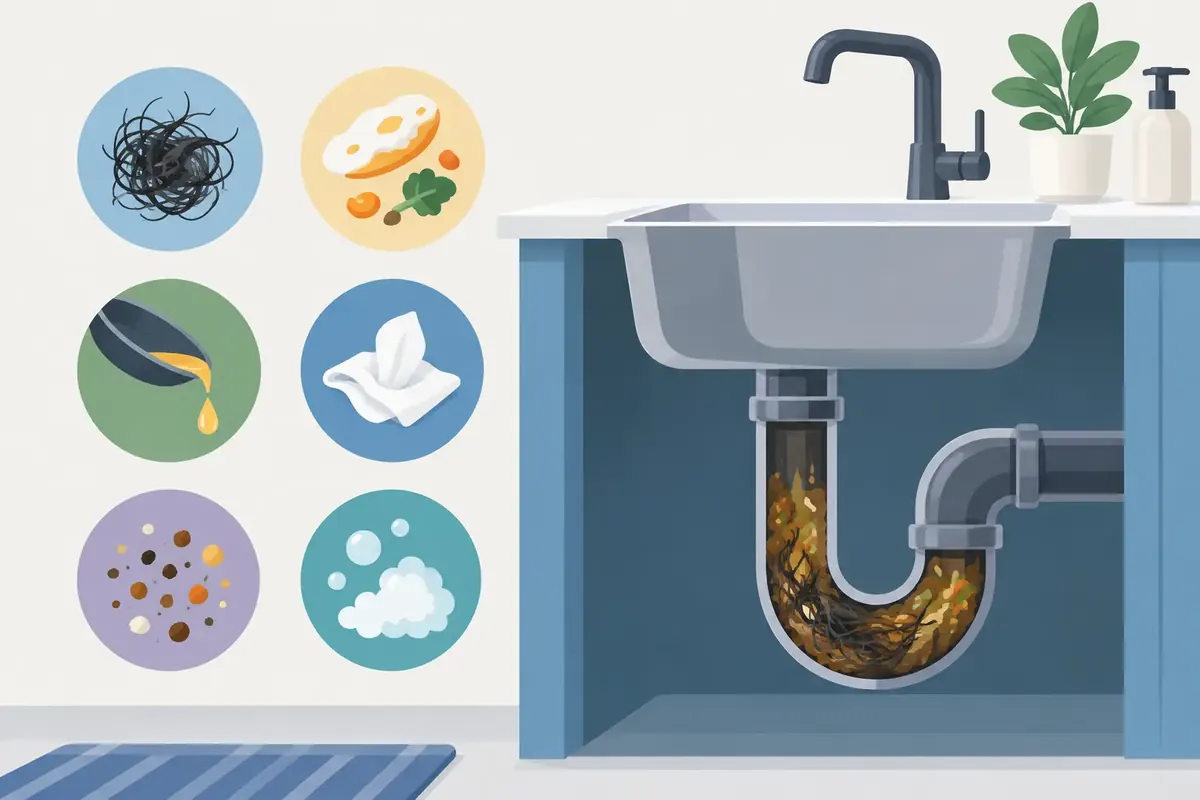
Grease is liquid when it is hot, which makes it easy to believe it has safely gone down the disposal or sink. As it cools inside the drain line, however, it coats the pipe walls. Food particles, coffee grounds, soap residue, and other debris then stick to that coating. Over time, the open space inside the pipe becomes smaller until ordinary water flow is enough to trigger another clog.
Garbage disposals help process small scraps, but they are not designed to handle everything. Fibrous vegetables, eggshells, pasta, rice, flour, and large amounts of food waste can contribute to repeat kitchen clogs. The practical solution depends on the condition of the line. Sometimes professional drain cleaning removes accumulated buildup. In other cases, an aging or poorly sloped pipe is allowing debris to settle in the same spot.
Hair, soap scum, and personal-care products
Bathroom drains collect a steady combination of hair, soap, toothpaste, shaving residue, skin oils, and thick personal-care products. Hair catches on rough spots inside the pipe or around the stopper assembly, forming a net that holds everything else in place.
A quick cleaning near the drain opening can help when the blockage is shallow. If the tub or shower keeps draining slowly after that, the buildup may be farther down the branch line. Wipes, cotton swabs, dental floss, and hygiene products can make the situation worse. Even products labeled "flushable" do not break apart like toilet paper and should stay out of the toilet.
A partial blockage that was never fully removed
This is one of the most common reasons a clog returns. A plunger often moves a blockage enough to let water pass, but it does not necessarily remove it. Chemical drain cleaners can sometimes create a narrow channel through soft buildup without clearing the pipe wall.
That temporary flow feels like a solved problem, until more debris catches on what remains. Repeatedly using harsh chemicals is also a poor trade-off. They may damage certain pipes or seals, leave dangerous residue behind, and make later repairs less pleasant for whoever works on the line. A professional cable machine or hydro jetting service can clear the pipe more thoroughly when the situation calls for it.
Hidden Pipe Problems Behind Repeat Clogs
Not every recurring clog is caused by household habits. In older homes, rental properties, and commercial buildings with heavy use, the drain system itself may be the source of the trouble.
Tree roots entering the sewer line
Roots naturally seek water and nutrients. A tiny crack, loose joint, or opening in an underground sewer pipe can attract them. Once roots enter, they expand and catch toilet paper and waste moving through the line. The result may begin as an occasional slow drain, then progress to frequent backups.
Tree-root intrusion is especially likely when clogs affect multiple drains, occur outside after heavy water use, or return shortly after a basic drain clearing. Cutting roots may restore flow, but a camera inspection can show whether the pipe has cracks, separated connections, or deterioration that will continue inviting roots back.
Damaged, collapsed, or corroded pipes
Pipes do not last forever. Cast iron can corrode from the inside, older materials may crack, and ground movement can shift or break underground lines. A collapsed section, belly in the pipe, or offset joint creates a low point where water and solids collect instead of moving toward the sewer.
These conditions cannot be solved with better drain habits alone. They need an accurate diagnosis first. A camera inspection lets a trained plumber see the pipe's interior and identify whether cleaning, spot repair, lining, or replacement is the sensible next step. That prevents paying repeatedly for a short-term clearing when a structural repair is needed.
Improper pipe slope or installation issues
Drain lines rely on gravity. If a pipe does not have enough slope, solids may settle before they can travel through the system. Too much slope can also be a problem in some situations because water may move ahead while solids are left behind.
This issue can appear in remodeled homes, additions, converted commercial spaces, or properties with prior repairs. A drain that has clogged from the beginning, despite careful use, deserves a professional evaluation rather than another round of products from the hardware store.
Signs the Main Sewer Line May Be Involved
A clog in one fixture is often local to that fixture. When the main sewer line is restricted, the warning signs are usually broader and more urgent. Pay attention if you notice more than one of these conditions:
- Toilets gurgle when a sink, washing machine, or shower drains.
- Water rises in a tub or shower when a toilet is flushed.
- Several drains are slow at the same time.
- A floor drain backs up, especially in a basement, utility room, or commercial restroom.
- Sewage odors or wastewater appear around drains or outside near the sewer line.
Do not continue running water to test the problem if wastewater is already backing up. That can turn a contained issue into damage across floors, walls, inventory, or furnishings. A main-line backup calls for prompt service, particularly for businesses that need restrooms and sinks available to customers and staff.
How to Stop Clogs From Coming Back
Prevention is not about never using your drains. It is about keeping materials out that do not belong there and addressing warning signs before they become an emergency. Keep grease, oil, and fats out of kitchen drains. Let them cool in a container and dispose of them in the trash. Use sink strainers to catch food scraps and hair, and clean them regularly.
In bathrooms, remove hair from stoppers or strainers before it gets pulled into the line. Flush only human waste and toilet paper. For homes with long hair, young children, frequent guests, or busy family routines, those small habits make a meaningful difference.
Still, maintenance has limits. If the same fixture clogs every few months, or you have already tried careful use and basic cleaning, it is time to find the underlying cause. Drain cleaning equipment should be matched to the pipe material, blockage type, and location. Hydro jetting can be highly effective for grease and sludge, but it is not automatically the right choice for every older or damaged line.
When to Call a Professional Plumber
Call for help when a clog returns quickly, drains are backing up in multiple areas, you smell sewage, or a plunger no longer changes anything. These are signs that the blockage may be deeper than the fixture trap or connected to the main sewer line.
A qualified plumber can identify the source instead of guessing, clear the line safely, and explain the repair options in plain language. At Angle Stop Plumbing, our team treats every customer like family, with upfront pricing, respectful service, and solutions designed for lasting peace of mind.
A recurring drain clog does not have to become part of life at your property. Address the pattern now, protect your pipes from further stress, and give your home or business the dependable drainage it needs.