A shower that has slowly lost pressure, a water heater that seems to run longer, and white crust around a faucet are easy to dismiss as minor annoyances. But when homeowners ask, “can hard water damage pipes?” the honest answer is yes, although the damage usually happens gradually through mineral buildup rather than a sudden pipe failure.
Middle Tennessee water can contain dissolved calcium and magnesium. Those minerals are not generally harmful to drink, but they can create expensive problems inside plumbing systems over time. Knowing what hard water does, what it does not do, and when to call a plumber can help protect your home, water heater, fixtures, and budget.
Can Hard Water Damage Pipes? Yes, Over Time
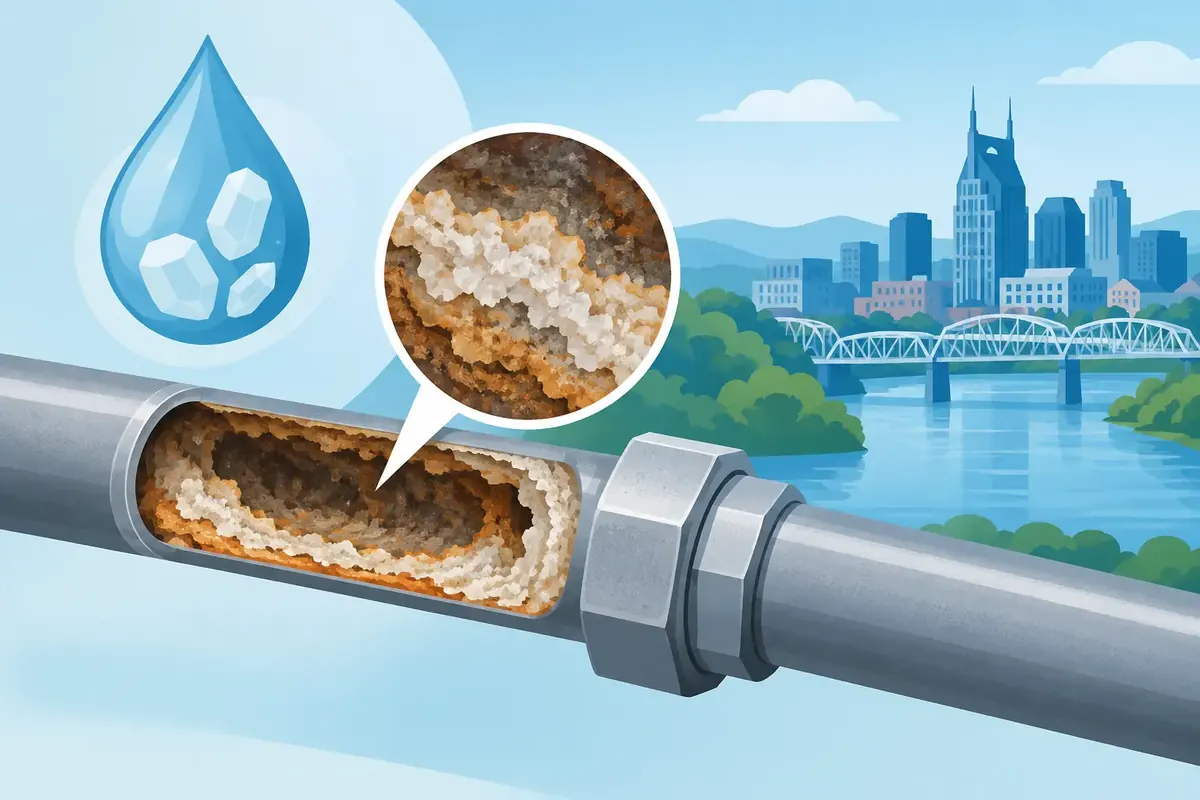
Hard water does not normally eat through a copper, PEX, or PVC pipe the way a corrosive chemical might. Instead, its minerals can separate from the water and cling to pipe walls, valves, fixtures, and water-using appliances. This accumulation is called scale.
Scale narrows the interior of water lines little by little. Think of it like cholesterol building in an artery: water can still move through the pipe, but the pathway gets smaller and less efficient. In severe cases, mineral deposits can restrict flow enough that one faucet or shower has noticeably weaker pressure than the rest of the house.
The effect depends on several factors. A home with moderately hard water may go years with only cosmetic mineral spots. A home with very hard water, older metal piping, high hot-water use, or a neglected water heater may see problems much sooner. Hot water accelerates scale formation, which is why water heaters, hot-side fixtures, and appliances often show the earliest signs.
Hard water can also make existing plumbing weaknesses worse. For example, a partially clogged shutoff valve or an aging fixture cartridge may become difficult to operate once mineral deposits build up around moving parts. The minerals may not be the original cause of the failure, but they can shorten the useful life of the component.
Where Mineral Buildup Causes the Most Trouble
Water heaters are especially vulnerable
A conventional tank water heater repeatedly heats the same incoming water. As minerals settle out, sediment and scale collect near the bottom of the tank and on heating surfaces. That layer forces the unit to work harder to transfer heat into the water.
You may hear popping, rumbling, or banging from a tank water heater as water gets trapped beneath sediment and turns to steam. The heater may take longer to recover after showers, use more energy, and wear out earlier than expected. Gas and electric tank heaters are both affected, although the symptoms can look different.
Tankless water heaters need attention as well. Their compact heat exchangers are highly efficient, but small internal passages are more sensitive to mineral scale. Manufacturers often recommend periodic flushing, especially where water hardness is high. Skipping that maintenance can reduce performance and may affect warranty requirements.
Faucets, showerheads, and valves can clog
When a showerhead sprays unevenly or a kitchen faucet has a weak stream, the aerator or spray openings may be blocked with scale. These are usually manageable repairs, but deposits can also collect inside fixture cartridges, toilet fill valves, ice-maker lines, and appliance connections.
A faucet that drips, sticks, or is hard to turn may need more than surface cleaning. Forcing a mineral-bound handle can damage internal seals or the cartridge. A qualified plumber can determine whether the fixture can be cleaned and repaired or whether replacement makes better financial sense.
Older metal piping deserves closer attention
Scale buildup is most concerning in older galvanized steel pipes. Galvanized systems can develop internal mineral deposits and corrosion products that dramatically reduce the pipe opening. Homeowners may notice rusty water, poor water pressure, or recurring leaks in different locations.
Copper and PEX do not react in exactly the same way. Copper can still collect scale, particularly in hot-water lines, while PEX has a smoother interior surface and is less likely to build heavy deposits quickly. Neither material is completely immune to the effects of hard water throughout the rest of the plumbing system.
Signs Your Home May Have a Hard-Water Problem
Hard water leaves clues well before it creates a major plumbing repair. White or chalky residue on faucets, shower glass, dishes, and around appliance connections is one common sign. So are stiff laundry, soap that does not lather easily, dry-feeling skin after bathing, and spots on clean glasses.
Inside the plumbing, pay attention to declining hot-water performance, reduced flow at one or more fixtures, noisy water heaters, or repeated failures of faucet parts and toilet fill valves. A sudden loss of pressure is not always a scale problem, however. It can also point to a leak, a failing pressure regulator, a closed valve, or a more serious supply-line issue.
That distinction matters. Do not assume every pressure problem is caused by hard water and delay an inspection. If water pressure drops suddenly, water is discolored, you see moisture around piping, or a water heater is leaking, prompt professional service is the safer choice.
How to Protect Pipes From Hard-Water Scale
The right solution begins with a water test and a clear look at the home’s plumbing. A test can measure hardness and identify other water-quality concerns that may affect treatment choices. There is no benefit in guessing or installing equipment that does not match the household’s actual needs.
For many homes, a properly sized water softener is the most effective way to reduce calcium and magnesium before they travel through the plumbing system. Traditional ion-exchange softeners require salt and regular maintenance, but they offer strong protection for fixtures, water heaters, and appliances in areas with genuinely hard water.
Salt-free descaling systems are another option. They do not remove hardness minerals from the water in the same way a softener does, but they may help reduce how strongly minerals adhere to surfaces. They can be a reasonable fit for some households, particularly where customers want less maintenance. The trade-off is that they may not solve every hard-water symptom, and results depend on water chemistry and usage.
Regular maintenance matters even after treatment is installed. Water heaters should be inspected and flushed on an appropriate schedule. Tankless units may need professional descaling. Faucet aerators and showerheads can be cleaned when buildup appears, while failing valves and cartridges should be repaired before they become a bigger inconvenience.
For landlords and commercial property managers, a consistent maintenance plan is especially valuable. Multiple occupants, higher hot-water demand, and more fixtures can make scale-related wear appear faster. Addressing water quality early can help avoid tenant complaints, water-heater downtime, and avoidable fixture replacements.
Is Pipe Replacement Ever Necessary?
Not every home with hard water needs new pipes. If the system is functioning well and buildup is caught early, water treatment and routine maintenance may be enough to protect it going forward.
Replacement becomes more likely when older galvanized piping is severely restricted, leaks are recurring, water flow is poor throughout the building, or corrosion has compromised the pipe walls. In that situation, cleaning a few fixtures will not correct the underlying issue. A professional inspection can identify whether the problem is isolated to a valve or branch line, or whether repiping is the more reliable long-term answer.
When replacement is needed, modern materials can improve reliability, but water quality should still be part of the plan. Installing new piping without addressing very hard water can leave water heaters, valves, fixtures, and appliances exposed to the same mineral buildup.
When to Call a Plumber
A plumbing professional can test hardness, inspect water-heater sediment, check pressure, and evaluate whether scale is affecting fixtures or piping. This is particularly worthwhile if you have recently purchased an older home, notice a steady decline in water pressure, or replace faucet and appliance parts more often than seems normal.
Angle Stop Plumbing serves Middle Tennessee homeowners and businesses with water-quality evaluations, water softeners, filtration and descaling options, water-heater maintenance, and pipe repair. You should receive straightforward recommendations based on the condition of your plumbing, not pressure to choose a system that does not fit your home.
Hard water usually gives families time to act, but it rarely improves on its own. A simple water test and timely maintenance can keep mineral deposits from quietly turning into restricted pipes, an inefficient water heater, and a much larger repair later.