That faint refill sound after everyone has gone to bed is more than an annoyance. The question, “why does toilet keep running?” usually means clean water is slipping from the tank into the bowl around the clock. It can raise your water bill, wear out working parts, and leave you wondering whether a small repair is about to become a bigger plumbing problem.
The good news is that a running toilet is often caused by a part inside the tank, not a damaged toilet or sewer line. The right fix depends on where the water is going and why the tank cannot hold its proper water level.
Why Does a Toilet Keep Running?
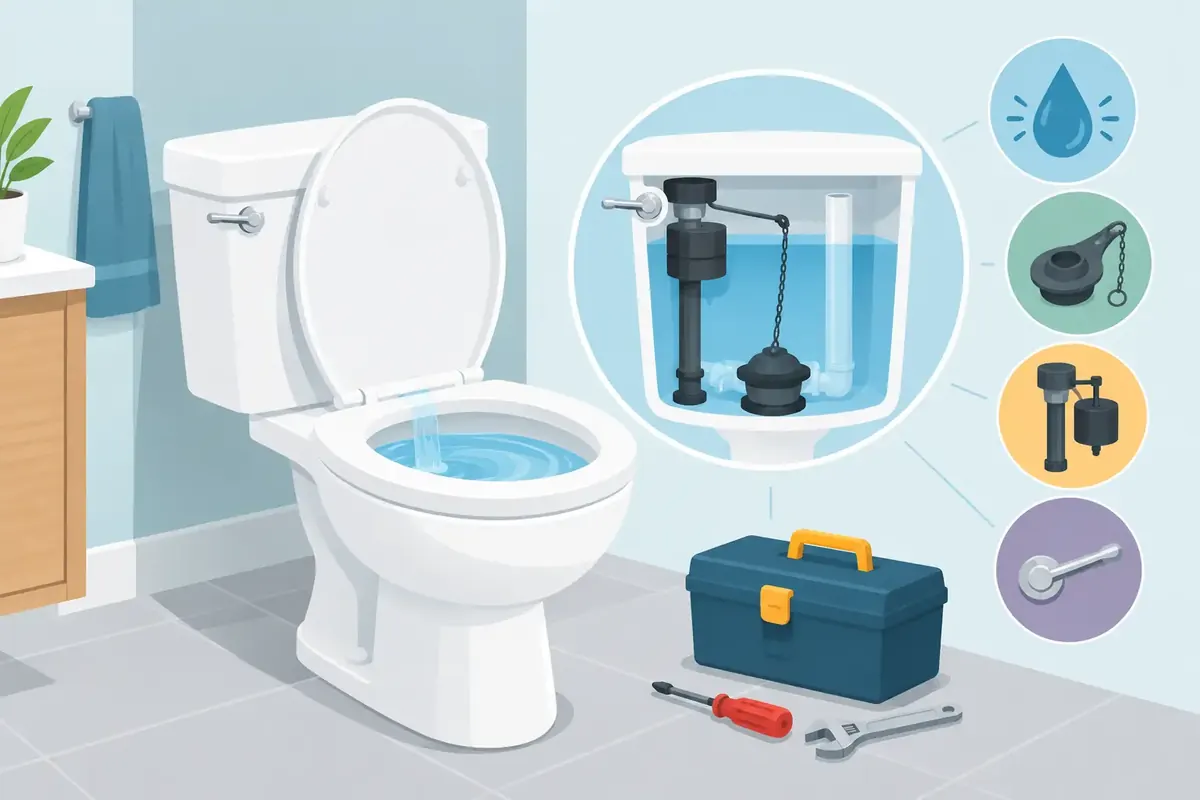
A toilet tank fills after a flush, then stops when the float tells the fill valve the tank has reached the correct level. Water remains in the tank until the next flush because a rubber flapper seals the opening at the bottom.
When that seal leaks, the fill valve does not shut off, or water rises into the overflow tube, the toilet may keep cycling or run continuously. Sometimes the sound is obvious. Other times, the tank quietly refills for a few seconds every several minutes. Either way, it is worth addressing promptly.
A worn or dirty flapper
The flapper is the most common culprit. This flexible rubber piece lifts when you flush and drops back down to seal the flush valve opening. With age, it can become warped, stiff, cracked, coated with mineral buildup, or simply unable to sit flat on the opening.
When the flapper leaks, water slowly leaves the tank and enters the bowl. The tank level falls, the fill valve turns back on, and the cycle repeats. If you have hard water, mineral deposits can shorten the life of rubber components and prevent a clean seal even before the flapper looks badly worn.
A flapper chain that is too short or tangled
A chain connected to the flush handle raises the flapper. If it is too tight, kinked, or caught under the flapper, the flapper may not close all the way. On the other hand, a chain with excessive slack may cause an incomplete flush.
This is a small adjustment, but it needs to leave just enough slack for the flapper to rest fully closed. Avoid pulling the chain tight in an effort to make the handle feel more responsive. A properly sealed flapper matters more than a stiff handle.
A fill valve that will not shut off
The fill valve is the assembly that refills the tank after flushing. Older toilets may use a float ball on an arm, while many newer toilets use a vertical float cup. If the valve is worn, obstructed, or out of adjustment, it may continue admitting water after the tank is full.
You may notice a steady hissing sound, water movement near the top of the tank, or water entering the overflow tube. A failing fill valve is usually repairable, but an incorrectly installed replacement can create new leaks. If you are not comfortable shutting off the supply and working inside the tank, a plumber can handle it quickly.
Water level set too high
Every tank has an overflow tube, which prevents the tank from spilling onto the bathroom floor if the fill valve does not stop. Water should sit below the top of that tube. If it reaches or flows into the tube, water is being sent directly into the bowl and the fill valve will continue to run.
Many fill valves have a simple adjustment screw or sliding clip that changes the float height. Lowering the water level slightly may solve the issue, but do not set it so low that the toilet produces a weak flush. If the water level will not stay where you set it, the fill valve itself may be failing.
A damaged flush valve seat or tank component
Less commonly, the plastic or metal seat beneath the flapper is rough, cracked, or damaged. A new flapper cannot seal properly against a damaged surface. A cracked overflow tube, loose flush valve assembly, or a tank crack can also cause persistent water loss.
These repairs are more involved because the tank may need to be drained and parts removed or replaced. A crack in the porcelain tank deserves prompt professional attention, especially if water is appearing outside the toilet.
A Quick Way to Find the Leak
Before buying parts, try a simple dye test. Remove the tank lid carefully and place it on a folded towel or stable surface. Add a few drops of food coloring to the tank water, then do not flush for about 15 to 20 minutes.
If colored water appears in the bowl, water is leaking past the flapper or flush valve. If the bowl stays clear but the tank water rises into the overflow tube, focus on the fill valve or float adjustment instead.
You can also listen closely after the tank finishes filling. A brief refill every few minutes usually points to a slow tank-to-bowl leak. A constant hiss or visible flow into the overflow tube more often points to a fill valve problem.
What You Can Safely Check Yourself
Homeowners can often handle a few basic checks without taking on a major repair. First, make sure the shutoff valve behind or beside the toilet works. Turn it gently clockwise only if you need to stop the water. Do not force a corroded valve, as it can break or begin leaking.
With the tank lid off, look for an obvious chain obstruction, a flapper that is visibly out of place, or water pouring into the overflow tube. You can gently press the flapper down. If the running stops, the flapper or its seating surface is likely the issue.
If you replace a flapper, bring the old one or note the toilet brand and model if possible. Flappers are not all the same size or shape. A part that looks close enough may still leak. Generic replacement kits can work well, but the lowest-cost part is not always the best choice for a toilet that has been reliable for years.
When a Running Toilet Needs a Plumber
Call for service if water is leaking onto the floor, the toilet rocks at the base, the shutoff valve does not work, or the problem continues after a reasonable flapper or fill-valve check. Those signs can indicate a separate issue at the supply connection, wax ring, toilet base, or internal tank hardware.
It is also wise to call when the toilet runs intermittently but you cannot identify the cause. A small internal leak can waste a surprising amount of water over time, and a professional can test the toilet, inspect the fill and flush components, and make sure the repair is matched to the fixture.
For landlords and commercial property managers, a running toilet should not be left on a maintenance list indefinitely. High-use restrooms wear components faster, and an unnoticed leak can add up across multiple fixtures. Keeping replacement parts and regular fixture inspections on the schedule helps prevent after-hours calls and avoidable water costs.
Angle Stop Plumbing serves Middle Tennessee homeowners and property operators with respectful, straightforward plumbing repairs. Our team can identify the source of a running toilet, explain the repair before work begins, and treat your home or business with the care you would expect from a family-focused local plumber.
If the sound is keeping you awake or the water bill has climbed without explanation, do not wait for the toilet to quit flushing altogether. Turning off the toilet’s water supply when necessary protects your home in the moment, and a timely repair restores the quiet, dependable bathroom your family needs.