A shower that turns into an ankle-deep puddle is usually sending a clear message: hair, soap residue, and body oils have started building up inside the drain. Knowing how to clear shower drains early can keep a minor nuisance from becoming a complete blockage, a leaking shower pan, or a bigger drain-line problem.
The good news is that many shower clogs are close enough to the drain opening for a homeowner to remove safely. The key is to start gently, use the right tools, and know when not to force the issue. A drain that keeps clogging or backs up with dirty water may be connected to a problem farther down the line.
Start With the Safest Way to Clear a Shower Drain
Before reaching for a chemical cleaner, remove the drain cover and take a look. In many showers, the clog is a visible mat of hair tangled around the stopper, crossbars, or the top of the drain. Put on gloves, use a flashlight, and pull out anything you can reach with your fingers or a small plastic drain tool.
A bent wire hanger can be tempting, but it can scratch a finished drain, damage certain stopper assemblies, or push the clog deeper. A flexible plastic drain strip is a better choice for most shallow hair clogs. Slide it in slowly, pull it out carefully, and expect it to bring up hair and soap buildup. It is not a glamorous job, but it often restores normal drainage in a few minutes.
Once the visible material is removed, flush the drain with hot tap water for several minutes. Do not use boiling water, especially if your home has PVC drain piping. Extremely hot water can soften or stress plastic components and may not be safe for every fixture. Hot tap water is usually enough to help rinse away loosened soap residue.
Check the Stopper Before You Assume the Pipe Is Clogged
Some shower stoppers collect hair underneath or have a mechanism that prevents water from flowing freely when it is not positioned correctly. Lift or remove the stopper according to its design, then clean the underside and the opening beneath it. If it moves poorly, clean away residue before reinstalling it.
This small step is easy to overlook. A shower may seem clogged when the real issue is simply a stopper that is coated with soap film or sitting too low in the drain.
Use a Plunger the Right Way
If removing the hair does not solve the problem, a plunger may help dislodge a soft clog. Use a clean cup plunger reserved for sinks and showers, not a toilet plunger. Add enough water to cover the rubber cup, then create a firm seal over the drain opening.
For a tub-shower combination, cover the overflow opening with a wet rag before plunging. Without that seal, the pressure you create can escape through the overflow instead of working on the clog. Use several controlled pushes and pulls, then test the drain with water.
Plunging works best on a partial blockage near the trap. It may not help much with a dense hair clog farther down the line, hardened mineral buildup, or a blockage in a shared branch drain. If the water rises quickly or another nearby fixture starts gurgling, stop and move to the next step.
Try a Small Drain Snake for Deeper Hair Clogs
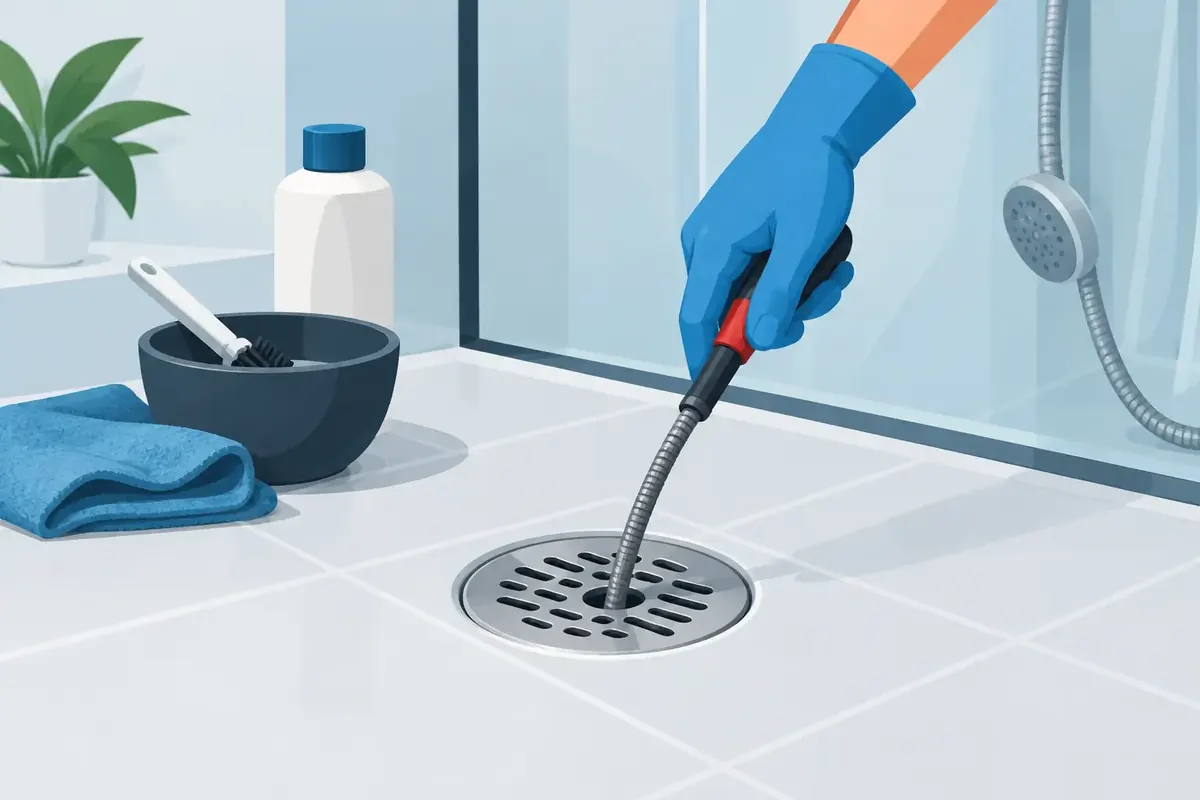
A hand-crank drain snake can reach farther than a plastic drain strip and is useful when the clog sits below the shower trap. Feed the cable in slowly. When you feel resistance, turn the handle gently rather than forcing it forward. The goal is to catch or break apart the clog, not damage the pipe or jam the cable.
Pull the cable out slowly and clean it as you go. Run hot tap water afterward to see whether the drain has improved. If it is still slow, one more careful pass may help. Repeated aggressive snaking is rarely a good idea for homeowners, particularly with older pipes or a drain line that has a history of trouble.
If a cable will not advance, keeps binding, or comes back clean while the shower still backs up, the obstruction may be beyond the reach of a small hand tool. That is a good time to call a professional instead of escalating to harsher methods.
Be Careful With Chemical Drain Cleaners
Chemical drain cleaners are often marketed as the fast answer, but they come with real trade-offs. Caustic or acidic products can splash, create harmful fumes, damage certain pipes and finishes, and make future drain service more hazardous for anyone working on the line. They also may burn a narrow channel through a clog without removing the hair that caused it.
Never mix drain products, and never combine a chemical cleaner with vinegar, bleach, ammonia, or another household cleaner. Do not plunge immediately after using a chemical product, either. The pressure can send corrosive liquid back toward you.
For a lightly slow drain caused by soap residue, an enzyme-based drain maintenance product may be a gentler option when used as directed. It is not an instant cure for a packed hair clog, but it can support regular maintenance after the drain is flowing again.
Avoid the Baking Soda and Vinegar Trap
Baking soda and vinegar are generally safe for many household cleaning tasks, but they are not a dependable solution for a serious shower clog. Their fizzing action may loosen minor surface grime, yet it does not have the mechanical strength to remove a wad of hair and soap deep in a drain.
Use them for deodorizing only after the drain is open, not as a substitute for physically removing the obstruction. If water is standing in the shower, the mixture will simply sit above the clog.
Signs the Problem Is Bigger Than the Shower Drain
A single slow shower drain is often a local clog. However, certain symptoms point to a larger issue in the branch line or sewer system. Pay attention if you notice several of these signs:
- Water backs up in the shower when the toilet flushes or the washing machine drains.
- The shower, tub, and bathroom sink are all draining slowly.
- You hear repeated gurgling from drains or a toilet nearby.
- Sewer-like odors persist after the shower drain has been cleaned.
- The clog returns soon after you remove hair from the drain opening.
These conditions can indicate a blockage farther down the pipe, scale buildup, tree-root intrusion, a damaged sewer line, or a venting concern. A homeowner-grade snake may not reach the obstruction, and forcing one can make a difficult repair more complicated.
How to Keep Shower Drains Clear Longer
The simplest prevention tool is a quality hair catcher that fits securely over or inside the drain. Clean it after each shower or at least every few uses. It takes seconds and prevents the main ingredient in most shower clogs from entering the pipe.
It also helps to wipe loose hair from shower walls before it washes down the drain. If household members use heavy conditioners, bath oils, or exfoliating products, a periodic hot-water flush can reduce residue near the top of the line. Just remember that prevention is different from forcing a clog away. Once water begins pooling, remove the buildup instead of hoping it will dissolve on its own.
Homes with hard water can see faster buildup because minerals combine with soap residue inside fixtures and pipes. If slow drainage is a recurring concern throughout the home, it may be worth asking a plumber whether water quality, older piping, or drain-line condition is contributing to the problem.
When to Call a Professional for Shower Drain Clearing
Call for professional drain service when the shower is fully blocked, the clog keeps returning, multiple fixtures are affected, or you suspect sewage is backing up. These are not problems to ignore, particularly in a busy family home, rental property, or commercial restroom. Continued backups can create sanitation concerns and may damage flooring, walls, or the area beneath the shower.
A trained plumber can identify where the blockage is located and use the appropriate equipment without guesswork. Depending on the issue, that may involve professional snaking, drain cleaning, camera inspection, or a closer evaluation of the sewer line. Angle Stop Plumbing brings 31 years of experience to Middle Tennessee homes and businesses, with respectful service, upfront pricing, and help available when a drain problem cannot wait.
A clear shower drain should let your morning routine stay just that: a routine. If a simple hair removal does not restore steady flow, protect your home by having the drain checked before the next shower turns a small clog into a larger cleanup.