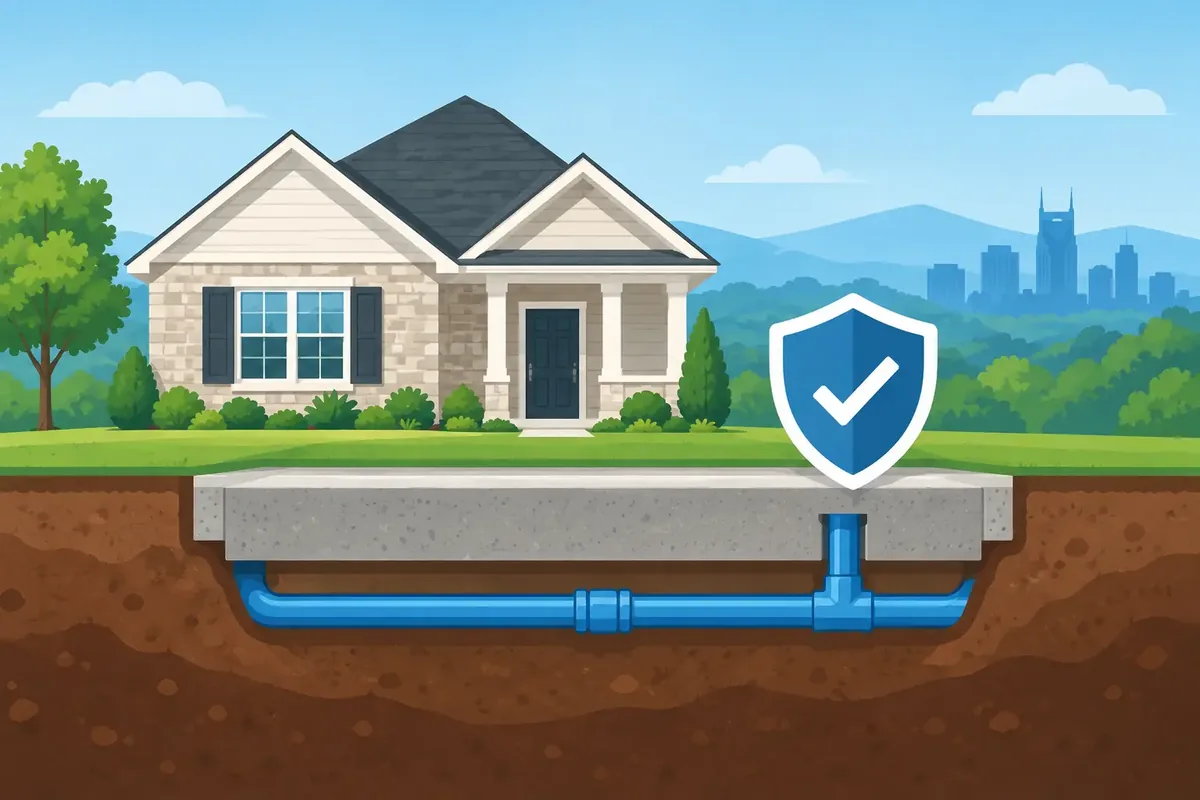
A slab leak can begin quietly beneath a home’s concrete foundation, then turn into damaged flooring, high water bills, mold concerns, and a stressful repair. The best way to prevent slab leaks is to pay attention to water pressure, water quality, pipe condition, and the small warning signs that often appear before major damage does.
For homeowners and property managers in Middle Tennessee, prevention is especially worthwhile. A hidden leak under a slab is not always visible until water has already traveled into flooring, walls, or surrounding soil. Routine plumbing care gives you a better chance of finding trouble early, when more repair options may be available.
What Causes Slab Leaks?
A slab leak occurs when a water or sewer line beneath a concrete foundation develops a crack, hole, failed fitting, or corroded section. Older copper piping can be vulnerable to corrosion over time, but slab leaks are not limited to older homes. Shifting soil, poor installation, high water pressure, abrasive contact between pipe and concrete, and chemical conditions in the water can all contribute.
Middle Tennessee properties also experience changing moisture conditions through the year. Heavy rain, dry spells, and soil movement can place stress on underground piping and foundations. That does not mean every foundation shift causes a leak, but it is one reason a plumbing inspection should consider the whole system rather than just the fixture that happens to be leaking today.
Keep Water Pressure in a Safe Range
High water pressure is one of the most preventable sources of stress on plumbing pipes, connections, fixtures, and appliances. When pressure stays too high, every faucet, toilet valve, washing machine hose, and water line works harder than it should. Over time, that strain can shorten the life of piping beneath the slab.
Many homeowners do not know their water pressure because the plumbing still appears to work normally. A professional can test it, inspect the pressure-reducing valve if your home has one, and recommend adjustments when needed. Pressure that is consistently too low can also point to a developing issue, so the goal is not simply lower pressure. It is stable pressure that is appropriate for your home’s plumbing system.
If you hear pipes banging when appliances shut off, notice toilets refilling at odd times, or see recurring leaks at fixtures, ask for a pressure check. Those issues may have a simple cause, but they are worth addressing before the strain reaches less accessible piping.
Pay Attention to Water Quality and Corrosion
Water chemistry can affect the inside of plumbing pipes over many years. Hard water, mineral buildup, and corrosive water conditions may gradually weaken certain types of piping and restrict water flow. The exact risk depends on your home’s pipe material, the age of the system, and the quality of the incoming water.
A water-quality test can help identify whether hardness, acidity, or other conditions deserve attention. Depending on the results, a water softener, whole-house filtration system, or water descaling solution may help protect fixtures and appliances while reducing the wear associated with mineral-heavy water.
Treatment is not a one-size-fits-all answer. A family with hard water may benefit from softening, while another property may need filtration for a different concern. The right recommendation starts with testing and an honest review of the plumbing system, not a guess.
Schedule Plumbing Inspections Before Problems Become Emergencies
A plumbing inspection is one of the most practical ways to prevent slab leaks. During a professional visit, a plumber can look for evidence of pressure problems, aging supply lines, corrosion, slow leaks, failing valves, and irregular water use. For a home with older pipes, recurring leaks, or a history of foundation movement, preventive inspections are particularly valuable.
Homeowners should also be aware of changes between service visits. Watch for an unexplained increase in your water bill, the sound of water running when every fixture is off, warm spots on a floor, damp carpet, cracked flooring, or a musty smell near walls and baseboards. None of these signs automatically confirms a slab leak, but each deserves prompt attention.
Check Your Water Meter for Hidden Leaks
A simple meter check can provide useful information. Turn off faucets, ice makers, irrigation equipment, and water-using appliances. Then look at the water meter and avoid using water for a period of time. If the meter continues moving, water may be escaping somewhere in the system.
This check cannot tell you where the leak is or how serious it may be. It does, however, give you a good reason to call a plumber instead of waiting for visible damage. Early leak detection may limit the repair scope and protect flooring, cabinets, and belongings.
Protect Pipes During Remodeling and Outdoor Work
Not every slab leak develops from age alone. Renovations, landscaping changes, concrete work, and digging around a property can affect plumbing when lines are not located first. Before beginning a project that may disturb soil, walls, or flooring, make sure the contractor understands where water and sewer lines run.
Inside the home, major remodeling can also reveal aging supply lines or fittings that deserve replacement while access is available. It may cost more to address questionable piping during a planned project, but it can be less disruptive than opening finished floors after a leak occurs.
Commercial properties should take the same approach. Restaurants, offices, rental communities, and retail spaces depend on reliable water service. A planned inspection and repair strategy can reduce the risk of interrupted operations, damaged inventory, or unexpected closures.
Consider Smart Leak Detection and Shutoff Options
Smart water shutoff valves can add another layer of protection for many homes and businesses. These devices monitor water use and may alert the owner to unusual activity, such as a continuous flow that suggests a leak. Some systems can automatically shut off the water supply when they detect a serious concern.
A smart shutoff valve cannot prevent every slab leak from forming, and it does not replace professional maintenance. It can, however, reduce the amount of water released if a leak develops while you are asleep, traveling, or away from a rental property. For families who travel often or landlords managing multiple properties, that added visibility can bring real peace of mind.
Before selecting a device, have a qualified plumber confirm that it fits your plumbing layout, water demands, and shutoff configuration. A good installation matters as much as the technology itself.
Do Not Ignore Small Leaks and Repeated Repairs
A dripping faucet may seem unrelated to a slab leak, but repeated small failures can be a clue that the system is under excessive pressure or that pipe materials are reaching the end of their useful life. Likewise, frequent pinhole leaks in copper pipe should not be treated as isolated incidents without examining the larger pattern.
Repairing one leak is often the right choice. But when leaks keep appearing in different locations, ask whether repiping, rerouting, pressure correction, or water treatment would be the wiser long-term investment. The answer depends on the property, the pipe material, access beneath the slab, and the condition of the rest of the system.
Act Quickly When Warning Signs Appear
If you suspect a leak under your foundation, avoid waiting to see whether it gets worse. Shut off water to the home if water is actively causing damage, move valuables away from wet areas, and call for professional leak detection. Accurate testing can help identify the source without unnecessary damage to floors or walls.
At Angle Stop Plumbing, our team treats every customer like family with respectful service, upfront communication, and a No Foul Language Guarantee. Whether you need preventive maintenance or help with a possible hidden leak, a timely inspection can protect your home, your budget, and the people who depend on both.