A pinhole leak behind a wall can turn a normal week into an expensive cleanup. That is why a copper PEX comparison matters before you replace aging water lines, remodel a bathroom, or build out a new space. Both materials can provide dependable plumbing when they are properly selected and installed, but they handle cost, water conditions, temperature, and future repairs differently.
For homes and commercial properties in Middle Tennessee, the best choice is rarely about declaring one pipe material the winner. It is about choosing a system that fits the building, the water supply, the budget, and the owner’s long-term plans.
Copper vs. PEX: What Changes for Your Property?
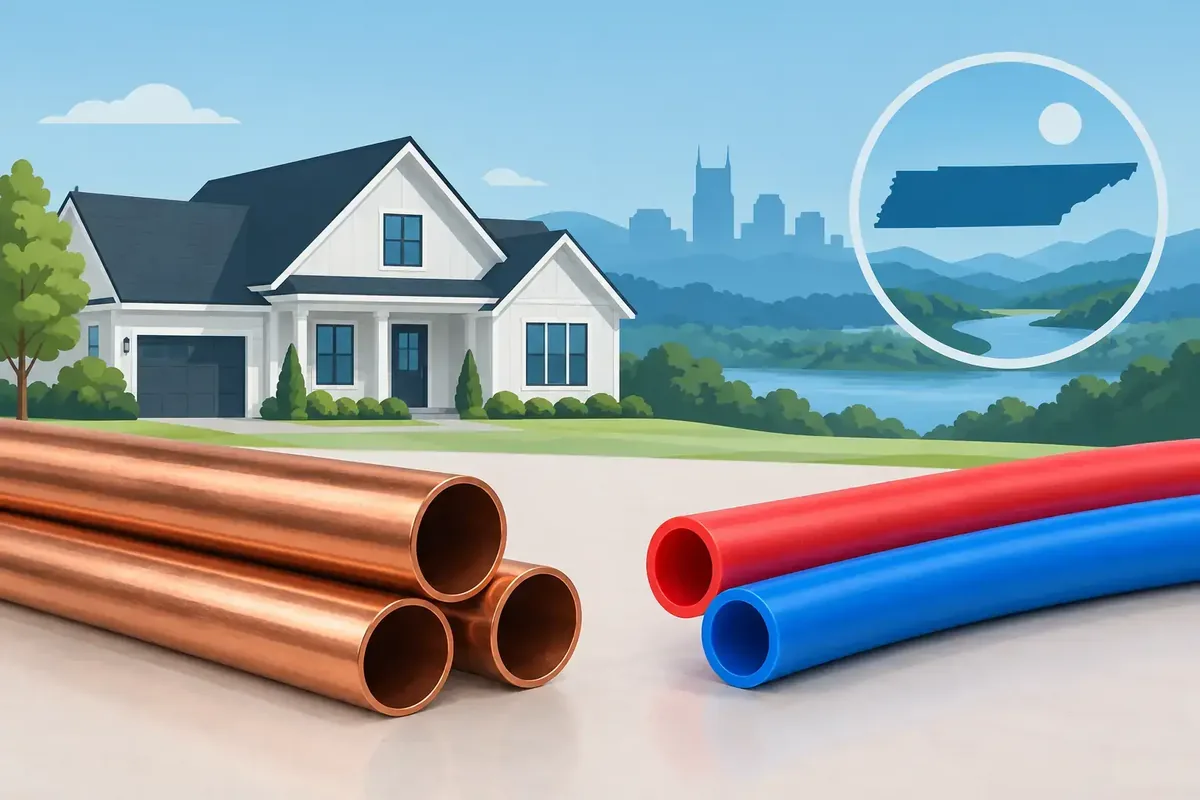
Copper has been a trusted plumbing material for generations. It is rigid metal tubing, typically joined by soldered or press fittings, and it has a familiar record of service in homes throughout Murfreesboro and the surrounding area. PEX, short for cross-linked polyethylene, is a flexible plastic tubing commonly used for hot and cold water distribution. It connects with specialized fittings and can often run through walls, ceilings, and framing with fewer joints.
The difference becomes clear during installation. Copper must be measured, cut, cleaned, and joined with precision. Each direction change may require a fitting. PEX bends around many obstacles, so a plumber can often make longer continuous runs with fewer connection points hidden inside walls.
That flexibility does not mean PEX is automatically better. Copper remains a strong option where exposed piping needs to look professional, where physical protection is a priority, or where a customer prefers a traditional all-metal system. The condition of the existing plumbing also matters. A partial repair may call for a different approach than a full-house repipe.
Cost: Installation Often Drives the Difference
Material pricing moves with the market, especially for copper. In many projects, copper costs more than PEX before labor is even considered. Because copper installation takes more time and usually requires more fittings, the total installed cost can be significantly higher.
PEX is generally more economical for new water-line runs and whole-home repiping. Its flexibility can reduce labor time, wall openings, and the number of fittings needed. That can be especially valuable in occupied homes, where homeowners want to limit disruption to bedrooms, kitchens, and family routines.
Still, the lowest upfront price should not be the only deciding factor. A repair that leaves deteriorated sections of old pipe in place may cost less today but create another service call later. A qualified plumber should inspect the full system and explain whether a targeted repair, reroute, or complete replacement is the more responsible investment.
Lifespan and Reliability Depend on Water and Workmanship
Copper has a long history of durability, and many copper systems perform well for decades. Yet copper is not immune to failure. Water chemistry, high velocity, poor grounding, improper installation, and certain soil conditions can contribute to corrosion or pinhole leaks. Homes with recurring pinhole leaks should not simply replace one short section without investigating why the failures are occurring.
PEX resists corrosion from water in a way copper does not. It will not develop the same type of internal pitting associated with metal pipe. It also handles minor movement and vibration well, which can reduce noise from expanding and contracting hot-water lines.
PEX has limits, too. It should not be exposed to direct sunlight for extended periods, because ultraviolet light can damage the material. It also requires proper support, correct fittings, and protection where it passes through framing or areas vulnerable to physical damage. In a garage, utility room, crawlspace, or commercial setting, the pipe may need shielding depending on its location.
Neither material forgives poor workmanship. A dependable system starts with correct sizing, secure connections, pressure testing, and installation that follows local code and manufacturer requirements. The pipe is only one part of the system.
Water Quality Can Affect the Decision
Middle Tennessee water varies by location and water source. Mineral content, acidity, disinfectants, and sediment can influence how plumbing components age. If a property has experienced repeated copper leaks, blue-green staining, metallic-tasting water, or visible scale buildup, testing the water and reviewing the plumbing layout can provide useful answers.
Water treatment may also protect the investment. Depending on the results, a whole-house filtration system, water softener, descaling system, or other treatment solution may help address the water conditions contributing to scale or corrosion. Treatment is not a substitute for damaged piping, but it can support the lifespan of a new plumbing system.
Freeze Resistance: PEX Has an Advantage, Not a Guarantee
When temperatures fall below freezing, water expands. Copper is rigid, so a frozen copper pipe is more likely to split or burst under pressure. PEX can expand somewhat, which gives it better resistance to freeze damage in certain situations.
That does not mean PEX is freeze-proof. A PEX line can still freeze, fittings can fail, and repeated freezing can weaken a plumbing system. Pipes in unconditioned crawlspaces, exterior walls, attics, garages, and vacant properties need insulation and thoughtful routing regardless of material.
During a cold snap, opening cabinet doors, maintaining indoor heat, and addressing dripping or poorly insulated lines can help prevent a costly emergency. If a pipe freezes, avoid using an open flame or improvised heating method. A plumber can safely assess the line and look for damage before water pressure returns.
Water Pressure, Hot Water, and Everyday Performance
Both copper and PEX can deliver excellent water pressure when the system is sized correctly. Poor pressure is often caused by undersized lines, failing fixtures, clogged aerators, pressure-regulator issues, mineral buildup, or a supply-side problem rather than the pipe material itself.
Copper tolerates high temperatures well and remains a familiar choice near water-heating equipment. PEX is also rated for hot-water distribution when the correct product is used within its temperature and pressure limits. Proper transitions near water heaters and other heat sources are essential. A trained installer will use the required fittings and clearances rather than treating every connection the same.
PEX may be installed in either a trunk-and-branch layout or a manifold system, where individual lines run from a central distribution point to fixtures. A manifold design can make shutoffs and future service more convenient, though it is not necessary for every home. Copper can also be arranged for convenient isolation, but changes often require more labor.
Appearance, Repairs, and Future Remodeling
Copper has a clean, professional appearance when it is visible. For exposed utility rooms, mechanical spaces, and certain commercial applications, that may matter. It is also less vulnerable to accidental damage from a bump or light impact than unprotected PEX.
Inside walls and ceilings, PEX’s flexibility can make future remodeling less invasive. A plumber may be able to reroute a line around an addition or new fixture without opening as much finished space. Fewer concealed joints can also be a practical benefit, although accessible shutoffs and connections still matter for long-term service.
For repairs, compatibility must be handled carefully. Copper and PEX can be connected with approved transition fittings, allowing a property owner to replace only the failed section when a full repipe is not yet necessary. The right repair depends on the age of the system, the pattern of failures, and whether the existing pipe is still in sound condition.
Which Pipe Is Right for Your Home or Business?
Copper may be the better fit when you want exposed metal piping, need exceptional resistance to physical damage, are matching an existing copper system, or have project requirements that favor a traditional material. It can be an excellent long-term choice when water conditions and installation practices support it.
PEX may be the better fit when budget, installation speed, corrosion resistance, and flexible routing are priorities. It is often well suited to whole-home repipes, additions, fixture relocations, and projects where minimizing wall damage matters.
A careful recommendation should not come from a quick glance at one leaking pipe. It should account for the building’s age, water pressure, pipe condition, water quality, accessible routes, and plans for the property. For a family home, it should also account for peace of mind: the confidence that the repair is meant to solve the problem, not simply postpone it.
If you are seeing recurring leaks, discolored water, unexplained water bills, or damage around ceilings and cabinets, ask for a full plumbing evaluation before choosing a material. Angle Stop Plumbing can explain the options in clear terms, provide upfront pricing, and treat your home with the same respect we would want for our own families. A well-planned piping decision today can protect the rooms, belongings, and people you care about tomorrow.