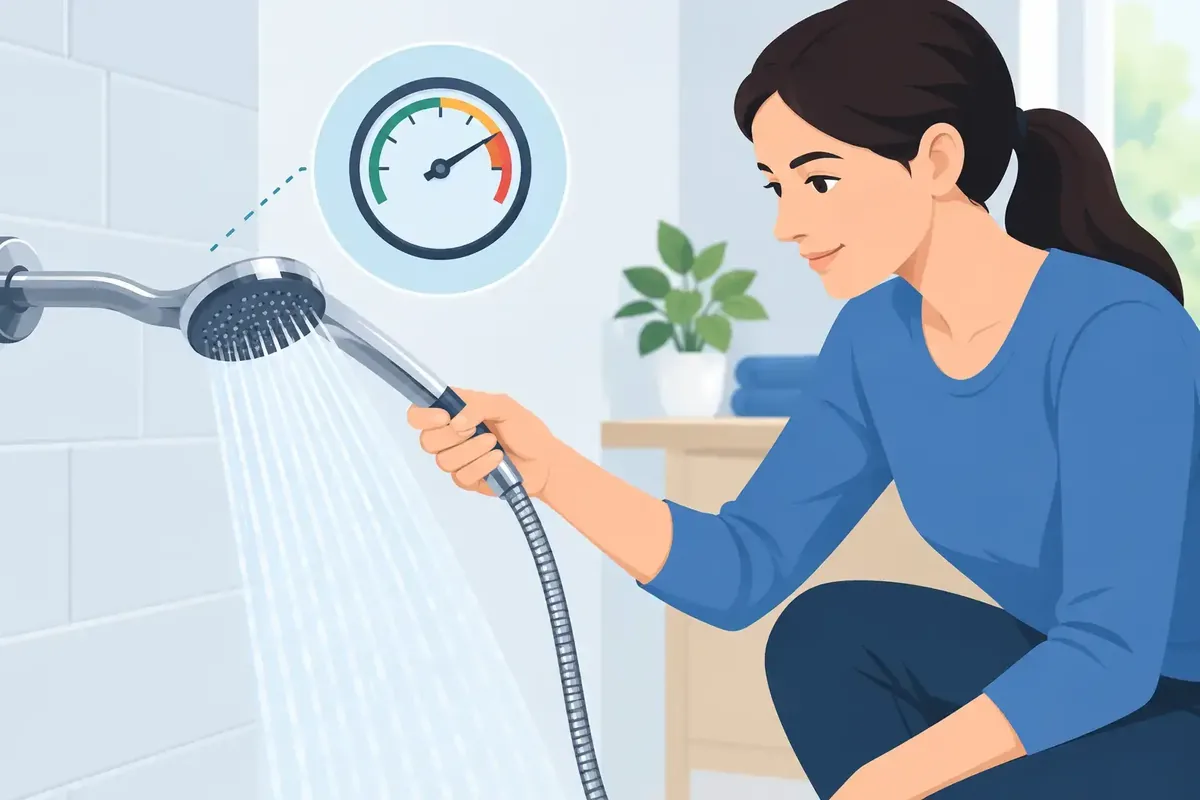
A shower that suddenly feels weak, pipes that bang when a faucet closes, or a washing machine that takes forever to fill can point to a pressure problem. Knowing how to test water pressure gives you a useful starting point before a small concern turns into a leak, appliance damage, or an inconvenient plumbing repair.
Water pressure is not the same as water flow. Pressure is the force pushing water through your pipes, measured in pounds per square inch (PSI). Flow is the amount of water that actually reaches a fixture. A clogged faucet aerator can reduce flow at one sink even when the home's overall pressure is perfectly healthy. Testing pressure helps separate a fixture-specific issue from a whole-house plumbing concern.
What Water Pressure Should Be in a Home?
Most homes perform well with water pressure between 40 and 60 PSI. Pressure below 40 PSI may leave showers, faucets, and appliances underperforming, especially when more than one fixture is running. Pressure above 80 PSI is too high for a residential plumbing system and should be addressed.
High pressure can be hard on supply lines, valves, water heaters, dishwasher hoses, ice maker lines, and toilet fill valves. It may not create an obvious emergency on day one, but constant excess pressure can shorten the life of parts throughout the home. That is why a pressure reading is more than a curiosity. It is a simple way to protect the plumbing system you rely on every day.
A commercial property may have different operating needs because of building size, fixture count, booster equipment, or local code requirements. Property managers should still treat a reading above the system's rated limits as a reason to schedule a professional inspection.
How to Test Water Pressure With a Gauge
The easiest method uses an inexpensive water-pressure gauge that threads onto a hose connection. Choose a gauge with a female hose-thread fitting and a PSI scale that reaches at least 100 or 160 PSI. A gauge with a red maximum-pressure indicator is especially helpful because it can reveal pressure spikes that occur when no one is watching.
Before testing, choose a location supplied by the home's main water line. An outdoor hose bibb is often the most convenient option. If you do not have a usable outdoor connection, a washing machine cold-water connection may work, but use care and turn off the appliance before disconnecting anything. Do not test from a hot-water connection.
Prepare for an Accurate Reading
Start when no water is being used in the building. Turn off faucets, showers, dishwashers, washing machines, irrigation systems, and any other equipment that draws water. If a toilet has just flushed, wait until it finishes filling.
Thread the gauge onto the hose bibb by hand. It should be snug enough to prevent drips, but do not force it or use excessive tools that could damage the fitting. Open the spigot fully, then read the dial once the needle settles. This is your static water pressure.
Write down the number, the date, and the time. A single reading is useful, but readings taken at different times can tell a more complete story. Municipal water pressure can vary during heavy neighborhood demand, and a pressure-reducing valve can behave differently as it begins to fail.
Check Pressure While Water Is Running
After recording the static pressure, leave the gauge connected and have someone turn on a cold-water faucet or shower inside the house. Watch the gauge while water is flowing.
Some drop is normal. A large drop may point to a restriction, such as a partially closed main shutoff valve, a failing pressure-reducing valve, corroded piping, a clogged whole-house filter, or a water meter issue. The amount of acceptable change depends on the size and condition of the plumbing system, so the reading should be considered alongside what you are experiencing at fixtures.
For example, a home with 60 PSI at rest that falls modestly while a shower runs may be operating normally. A home that starts at 45 PSI and drops sharply when a faucet opens deserves a closer look, particularly if the problem affects several areas of the house.
Test for Pressure Creep Overnight
Pressure that slowly climbs when water is not being used is called pressure creep. This often happens when a pressure-reducing valve is no longer regulating properly. It can also be related to thermal expansion, which occurs when water heats inside a closed plumbing system and has nowhere to expand.
To check for it, install a gauge with a maximum-pressure indicator at an outdoor hose bibb in the evening. Make sure no water will be used overnight, then check the gauge in the morning before anyone uses a fixture. The maximum indicator records the highest pressure reached.
If the pressure climbs above 80 PSI, do not ignore it just because the pressure has dropped by morning. Repeated spikes can strain plumbing connections and appliances. A licensed plumber can determine whether the pressure-reducing valve, thermal expansion tank, water heater setup, or another component needs attention.
What Low Water Pressure Can Mean
Low pressure throughout a house has several possible causes. The right repair depends on where the restriction begins and whether the problem is steady or intermittent. Common possibilities include:
- A main shutoff valve or water-meter valve that is not fully open
- A clogged sediment filter or water-treatment system due for service
- A failing pressure-reducing valve
- Mineral buildup or corrosion inside older pipes
- A leak in the water line or plumbing system
- A supply issue from the municipal water system or a well system
If low pressure occurs at only one fixture, begin with the simple possibilities. Clean the faucet aerator, inspect the showerhead for mineral buildup, and make sure the fixture's stop valves are fully open. If several fixtures have weak flow, the issue is more likely in the home's larger plumbing system.
Water filtration and softening equipment can also affect flow when cartridges, media, or screens become blocked. This does not mean filtration is a problem. It means every water-quality system needs the maintenance recommended for its design and the water conditions in your area.
What High Water Pressure Can Mean
A reading over 80 PSI is a clear sign to call a plumber. Do not try to solve it by partially closing a shutoff valve. That can restrict flow without properly controlling pressure, and it can create additional problems down the line.
Many homes have a pressure-reducing valve, often called a PRV, near the main water entry point. This device lowers incoming municipal pressure to a safer level for the home. Like any mechanical part, it can wear out, stick, or lose its ability to regulate consistently.
High pressure may also reveal a missing, failed, or improperly sized thermal expansion tank. This small tank helps absorb the pressure increase created as water heats in a water heater. It is particularly important in closed plumbing systems where a check valve or pressure regulator prevents expanded water from moving back toward the public supply.
Signs that may accompany high pressure include dripping relief valves, frequent toilet fill-valve failures, loud pipe noises, unexplained appliance hose leaks, or recurring drips at faucets. Each issue may seem minor by itself. Together, they often point to a system that needs professional attention.
When to Call a Professional Plumber
A pressure gauge can identify a concern, but it cannot diagnose every cause. Call for professional service if your test shows pressure above 80 PSI, pressure below 40 PSI throughout the building, major pressure swings, or an unexplained overnight increase.
You should also schedule an inspection if you see wet spots near pipes, receive an unusually high water bill, hear water running when no fixture is on, or notice that pressure changes suddenly from one day to the next. Those signs can indicate a hidden leak or a failing control component.
For homeowners and property managers in Middle Tennessee, Angle Stop Plumbing can inspect pressure regulators, expansion tanks, water heaters, filtration equipment, shutoff valves, and water lines with clear, upfront recommendations. Our team treats every customer like family, with respectful service and a No Foul Language Guarantee.
A quick pressure test is a smart home-maintenance habit, especially before installing a new water heater, replacing appliances, or purchasing a water-filtration system. Keep your reading with your home records, pay attention to changes, and act early when the numbers or your plumbing start telling a different story.