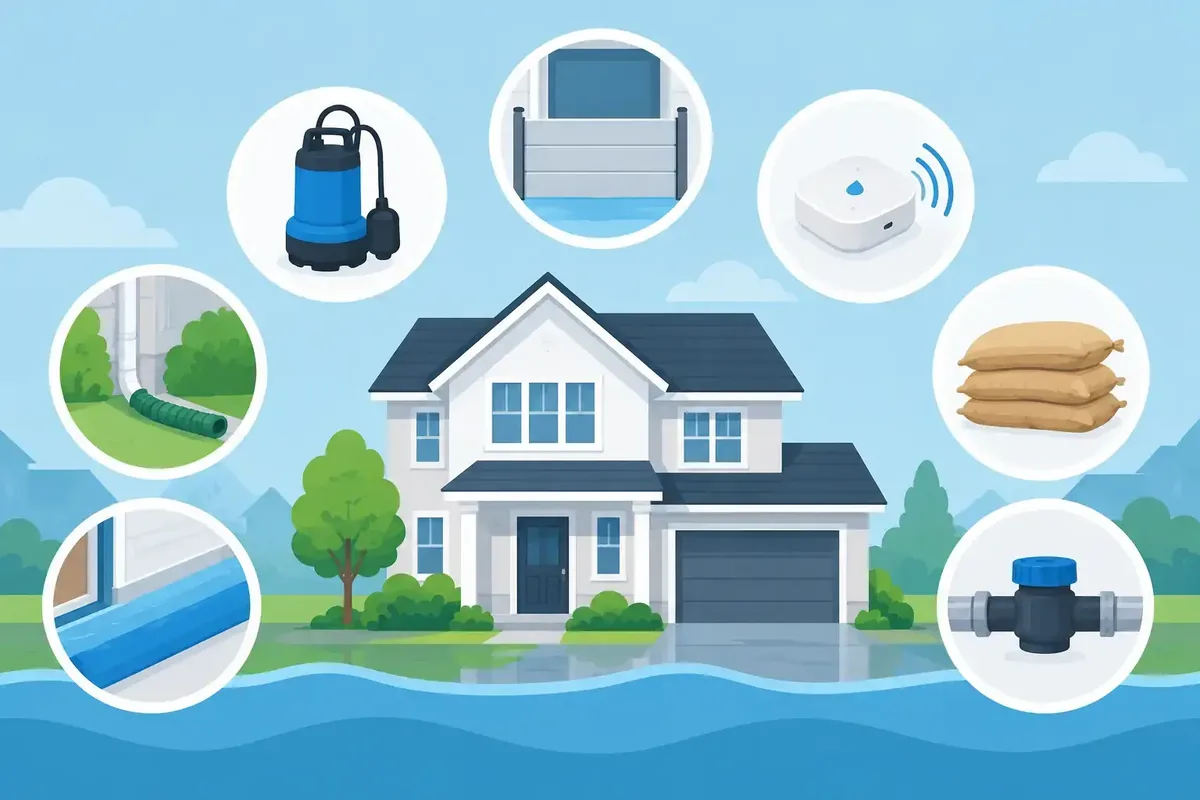
A burst supply line behind a refrigerator can release gallons of water before anyone notices. A failed water heater, overflowing toilet, or backed-up sewer line can do the same kind of damage in a hurry. The best flood prevention devices help stop water at the source, alert you early, or keep outside water and sewage from coming back into the property.
For Middle Tennessee homeowners, landlords, and commercial property managers, the right protection depends on where the water risk starts. A device that protects a basement from groundwater will not stop a washing machine hose from failing. The most dependable approach is to match the device to the threat, then have the plumbing system inspected and maintained before an emergency puts your home or business at risk.
1. Smart Water Shutoff Valves
A smart water shutoff valve is one of the strongest defenses against indoor plumbing leaks. Installed on the main water line, it monitors water movement and can automatically shut off the supply when it detects unusual flow. Many systems also send an alert to your phone, which is especially helpful when the home is empty, you are on vacation, or a rental property is between tenants.
These devices are well suited for leaks from supply lines, fixtures, water heaters, and appliances. Some models use a small leak sensor placed near a water heater, washing machine, dishwasher, or under-sink cabinet. Others analyze the water-use pattern throughout the house.
The trade-off is that smart shutoff valves need professional installation, a compatible main line, and reliable power or battery backup. They also need thoughtful settings. A system should recognize normal high-demand use, such as filling a large tub, without unnecessarily shutting off your water. For many homes, however, the ability to stop a major leak within minutes makes this a worthwhile upgrade.
2. Leak Sensors Where Water Damage Starts
Small battery-powered leak sensors are simple devices with a big job. They sit on the floor or in a shallow drain pan and sound an alarm when their contacts detect water. Connected models can send a phone notification as well.
Place them where a leak may go unnoticed: beside water heaters, behind washing machines, under sinks, near refrigerators with ice makers, around toilets, in crawl spaces, and near HVAC equipment. They are affordable and easy to add in several locations, so they make sense even when a full smart shutoff system is not in the budget.
A sensor does not fix a leak or stop water on its own. It only gives you a warning. That means it works best as part of a broader plan, particularly when paired with an automatic shutoff valve or a leak-detection system that can close the main water supply.
3. Sump Pumps and Battery Backups
If groundwater enters your basement, crawl space, or low-lying utility area, a sump pump is essential protection. The pump sits in a sump pit and moves collected water away from the foundation through a discharge line. It helps reduce moisture, standing water, and the chance of flooding during long rains.
A primary sump pump is only as useful as its power source. Storms can knock out electricity at the exact time the pump is needed most. A battery backup sump pump provides a second layer of defense when the primary pump fails or utility power goes out. An alarm that alerts you to high water in the pit is also a smart addition.
This is not a one-size-fits-all installation. The pit must be properly sized, the discharge line needs a safe route away from the foundation, and the pump capacity must fit the amount of water your property receives. A poorly routed discharge can send water right back toward the house, defeating the purpose.
4. Backwater Valves for Sewer Backup Protection
Heavy rain can overwhelm municipal sewer systems. When pressure builds in a sewer line, wastewater may flow backward toward a building, often through lower-level drains, toilets, or showers. A backwater valve is designed to prevent that reverse flow.
This device can be a valuable safeguard for homes and commercial buildings with basements, floor drains, or plumbing fixtures below the level of the street sewer. It uses a flap or gate that allows wastewater to leave the building but closes when sewage tries to return.
Backwater valves require regular access and maintenance. Debris can interfere with the moving parts, and some models may temporarily prevent normal drainage while the valve is closed during a severe backup event. A licensed plumber should evaluate the building layout, local requirements, and sewer connection before recommending one. It is a targeted solution, not a replacement for repairing a damaged or blocked sewer line.
5. Water Heater Safety Devices
Water heaters hold a large volume of water, so a failure can create an immediate mess. A drain pan beneath the unit can catch small leaks and direct water to an appropriate drain. It is especially useful when the water heater is located upstairs, in an interior closet, or over finished flooring.
The temperature and pressure relief valve is another critical safety component. Its primary role is preventing dangerous pressure buildup, but it should discharge safely through a properly installed pipe. If the relief valve is dripping, the drain pan is holding water, or the water heater has rust around fittings, do not ignore it. These can be early warnings of a problem that needs attention.
A water heater leak sensor and automatic shutoff valve provide stronger protection. Regular flushing, inspection of connections, and timely replacement of aging units reduce the risk further. No device can guarantee a tank will never fail, but early detection can prevent a small leak from becoming a flooring and drywall claim.
6. Washing Machine Shutoff Systems
Washing machine hoses are among the most common causes of sudden indoor water damage. The risk is higher with older rubber hoses, which can weaken without obvious signs. Braided stainless-steel hoses are a better starting point, but they still need periodic inspection.
An automatic washing machine shutoff valve closes the water supply when the washer is not in use or when it senses an abnormal condition. Some systems work with leak sensors on the floor behind the appliance. Others are built into smart-home water monitoring systems.
At a minimum, turn off the washer supply valves when leaving town for an extended period. If the valves are corroded, difficult to operate, or leaking at the stem, have them replaced. A shutoff you cannot operate during an emergency is not much protection.
7. Foundation Drainage and Downspout Protection
Not every flood begins inside the plumbing system. Water that pools next to the foundation can seep into crawl spaces and basements, contribute to erosion, and overload sump systems. Gutters, downspouts, grading, and drainage paths all play a role in keeping rainwater away from the building.
Downspout extensions should carry roof runoff well away from the foundation. Yard grading should slope away from the structure where practical. French drains, catch basins, and other drainage solutions may be appropriate for properties with persistent runoff, but they need to be designed for the site rather than added as a quick fix.
Keep gutters clear and check that discharged water is not directed toward a neighbor's property, a sidewalk, or back toward your own foundation. During a heavy rain, take a careful walk around the property. The places where water stands, runs toward the building, or enters a crawl space are often the places that need attention first.
Choosing the Best Flood Prevention Devices for Your Property
The best flood prevention devices are rarely just one product. A home with a finished basement may need a sump pump with battery backup and a sewer backwater valve. A newer home on a slab may benefit more from a smart main shutoff valve, leak sensors, and washing machine protection. A commercial property may need a tailored plan that also considers backflow equipment, floor drains, equipment rooms, and uninterrupted operations.
Start with the risks you can identify. Look for aging water heaters, older supply hoses, hidden appliances, slow drains, recurring wet areas, and plumbing fixtures below ground level. Then consider what happens when no one is there to respond. That is where monitoring and automatic shutoff equipment earn their value.
Professional installation matters because a flood-prevention device must work when the situation is stressful and time-sensitive. Angle Stop Plumbing can help property owners assess leak risks, install smart shutoff valves and related plumbing protection, and identify concerns before they turn into water damage.
A little prevention is easier on your home, your schedule, and your peace of mind than cleaning up after water has already found its way through the floor.