Cloudy water after a storm, chlorine odor at bath time, orange staining in the toilet, or scale on a water heater are not the same problem. A useful whole house filtration comparison starts by matching the equipment to what is actually in your water, rather than buying the largest system or the most heavily advertised one.
For Middle Tennessee homeowners, water quality can vary by neighborhood, water source, plumbing age, and whether the home uses municipal water or a private well. The right setup should protect your family, fixtures, water-using appliances, and plumbing investment without adding equipment you do not need.
Start With Your Water Source and Symptoms
City water is treated before it reaches your home, but many families still want to reduce chlorine taste and odor, sediment, or other aesthetic concerns. A whole-house carbon filter is often a sensible starting point when the water is otherwise safe and the main complaint is that it smells or tastes like a swimming pool.
Private well water calls for a more careful approach. Well water may contain sediment, iron, manganese, hardness minerals, sulfur odor, or bacteria. One household may need sediment filtration and a softener; another may need oxidation treatment, carbon filtration, and UV disinfection. A filter that works well for chlorine will not solve bacterial contamination, and a UV system will not remove sand, iron, or hardness.
Your home’s symptoms provide clues, but they are not a diagnosis. White buildup on faucets and a shortened water-heater lifespan often point to hard water. Orange or brown stains can suggest iron. A rotten-egg smell can be associated with sulfur or other water conditions. A professional water test gives the clearer answer and helps prevent an expensive mismatch.
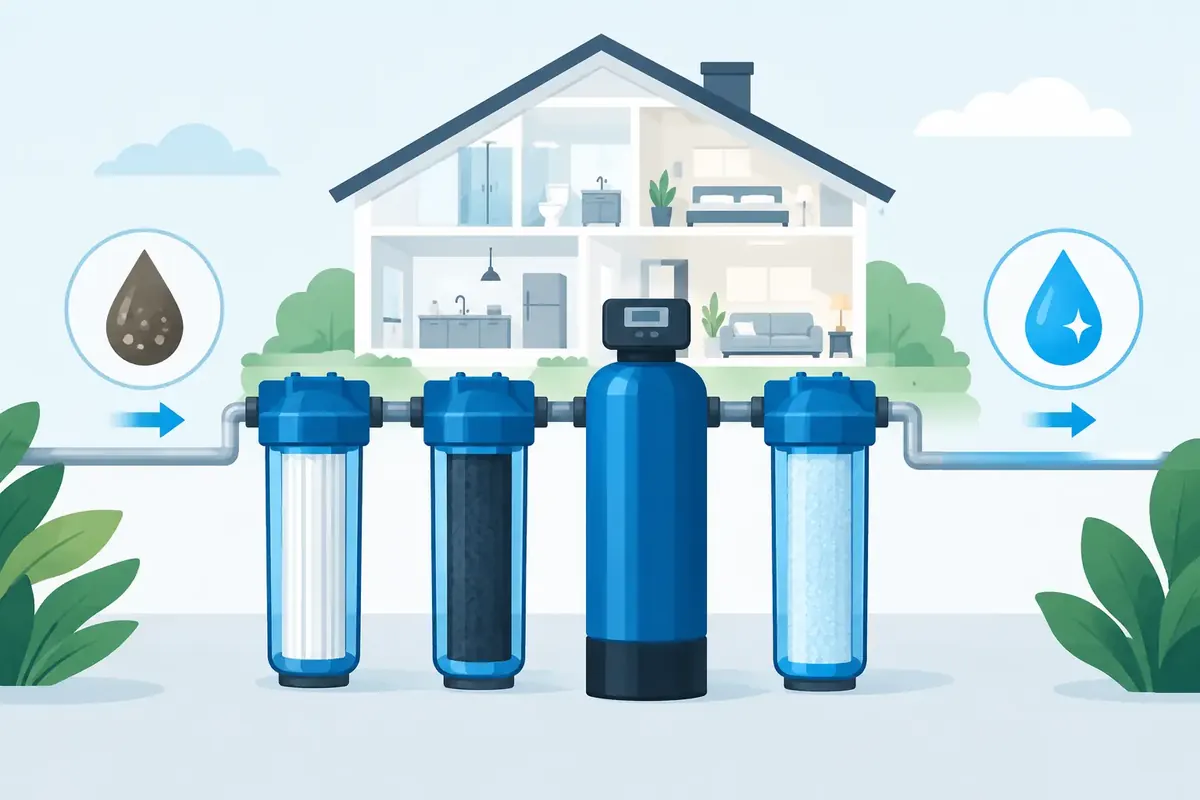
Whole House Filtration Comparison: What Each System Does
Whole-house filtration treats water as it enters the home, so it can improve water at showers, laundry connections, toilets, kitchen sinks, and appliances. That is different from a small drinking-water filter installed at one faucet.
Sediment filters
Sediment filters capture physical particles such as sand, silt, rust, and debris. They are especially valuable for well systems, older plumbing, and homes where water occasionally looks cloudy. They can also protect downstream equipment, including softeners, UV units, and fine carbon filters.
Their trade-off is maintenance. A cartridge that becomes loaded with debris can reduce water pressure, so filter changes need to follow the water conditions and manufacturer guidance. Sediment filtration does not remove dissolved minerals, chlorine, bacteria, or most chemicals.
Activated carbon filters
Carbon filtration is a strong choice for reducing chlorine taste and odor and improving the overall feel of municipally supplied water. Many homeowners notice the difference most clearly in showers and cooking water. Carbon can also address certain organic compounds, depending on the media and system design.
Carbon is not a catch-all solution. It generally does not soften hard water, remove iron reliably, or disinfect water. It also needs enough contact time and proper flow capacity. An undersized filter may perform poorly when several showers, appliances, and fixtures are running at once.
Water softeners and descaling options
A water softener is often included in a whole house filtration conversation, though it is not technically a filter. It uses ion exchange to reduce calcium and magnesium, the minerals responsible for hard-water scale. For homes with persistent white deposits, spotty dishes, stiff laundry, and scale buildup in water heaters, a properly sized softener can protect plumbing fixtures and equipment.
Traditional softeners require salt and periodic maintenance. Some homeowners prefer a salt-free descaling system because it can reduce scale adhesion without adding salt. That may be a good fit for certain households, but it does not remove hardness minerals the way a true softener does. The right choice depends on your water hardness, expectations, plumbing goals, and comfort with maintenance.
Iron and sulfur treatment
Iron filters and sulfur-treatment systems are designed for specific well-water concerns. They may use air injection, oxidation, specialty media, or other treatment methods to reduce staining and unpleasant odors. Because iron and sulfur can take different forms in water, treatment design should be based on testing rather than guesswork.
These systems can make a dramatic difference in a home with orange staining or sulfur odor, but they may need backwashing, drain access, electrical power, and routine service. Installation details matter as much as the equipment itself.
UV water treatment
A UV system uses ultraviolet light to deactivate bacteria and other microorganisms. It is commonly considered for private wells or when water testing identifies a microbiological concern. UV treatment is chemical-free and does not change the taste of water.
It is also very specific in what it does. UV does not remove particles, hardness, iron, chlorine, or sediment. Clear water is essential because suspended material can shield microorganisms from the light. That is why a sediment filter is frequently installed ahead of a UV unit, and why the lamp and sleeve require scheduled maintenance.
Reverse osmosis
Reverse osmosis is usually installed at a kitchen sink or another dedicated drinking-water location, not as the first line of whole-home treatment. It can reduce many dissolved contaminants and is a strong option for families who want an additional level of treatment for drinking and cooking water.
Think of RO as a complement, not an automatic replacement for whole-house equipment. It will not protect showers, washing machines, water heaters, or every fixture in the home. A common, practical arrangement is whole-house sediment and carbon treatment, or softening where needed, paired with an RO drinking-water system at the kitchen sink.
Capacity Matters as Much as the Filter Media
A system can use the right media and still disappoint if it is undersized. Whole-house equipment needs to keep up with your home’s peak demand, not just a single faucet. Consider the number of bathrooms, family members, high-flow showerheads, irrigation use, large tubs, appliance load, and whether the property includes a guest suite or commercial-use area.
A small filter may cause a noticeable pressure drop during busy mornings. A softener that is too small may regenerate too frequently and use extra salt and water. On the other hand, oversizing equipment without a reason can add unnecessary upfront cost. A qualified plumber can calculate appropriate flow rate and treatment capacity before installation.
Do Not Skip Maintenance and Installation Details
Every water-treatment system has a maintenance plan. Cartridge filters need replacement. Carbon media has a service life. Softeners need salt and occasional inspection. UV lamps need regular replacement. Backwashing systems need correct drain connections and settings.
Before choosing a system, ask who will handle service, what replacement parts cost, how often maintenance is expected, and whether the installation includes a bypass valve. A bypass allows water to continue flowing while equipment is serviced, which can be useful for busy households and commercial properties.
Placement also matters. Whole-house equipment is typically installed after the main water shutoff and before branches feed the rest of the building. A clean, accessible installation makes future service easier and helps protect the equipment from freezing, physical damage, and avoidable plumbing complications.
A Practical Way to Choose
Begin with a water test and an honest conversation about the problem you want solved. If the concern is chlorine odor, carbon may be enough. If scale is damaging fixtures and appliances, consider a softener or descaling approach. If well water contains iron, sulfur, sediment, or bacteria, the solution may be a staged system with several components working together.
It also helps to separate health-related concerns from convenience concerns. Water testing can identify issues that need priority attention, while taste, odor, spotting, and staining help guide comfort and appliance-protection decisions. Both matter, but they should not be treated as the same problem.
Angle Stop Plumbing helps Middle Tennessee families and property owners evaluate water-quality concerns with respectful service, upfront guidance, and equipment suited to the home. The best filtration system is not the one with the longest feature list. It is the one that addresses your actual water conditions, fits your household’s demand, and can be maintained with confidence for years to come.