
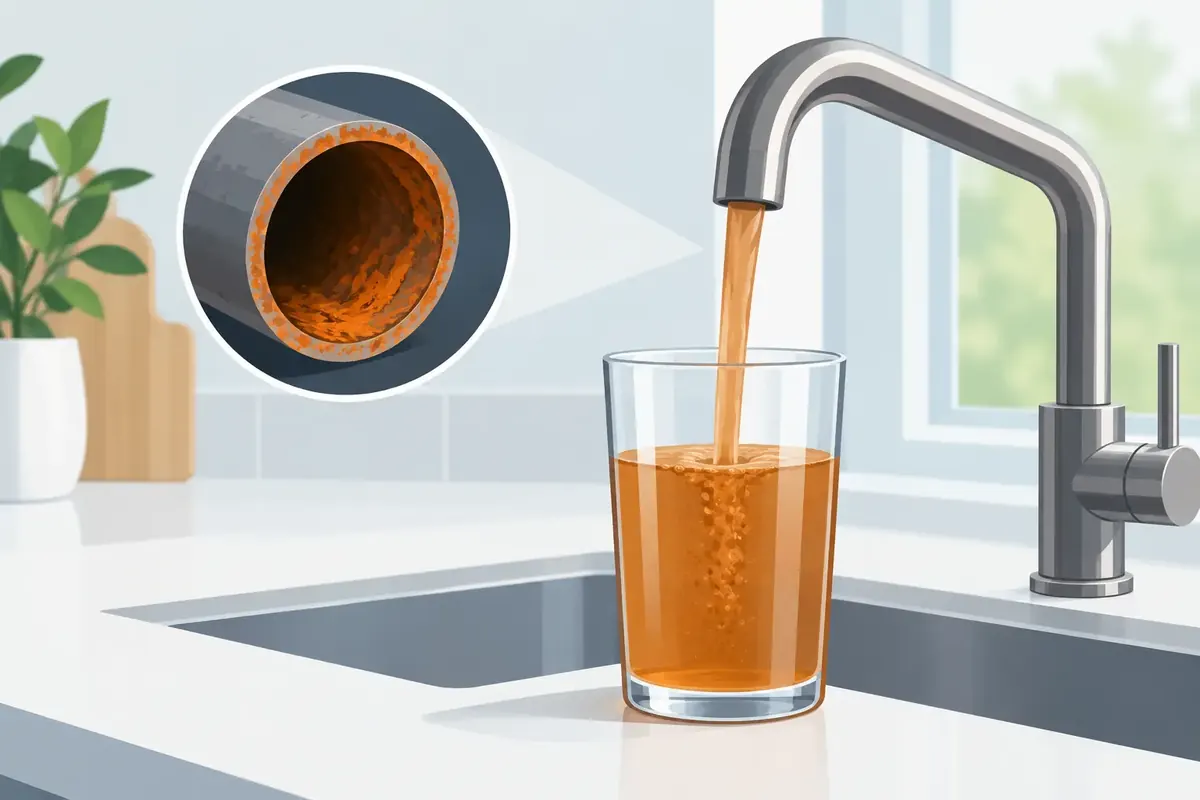
A glass of rusty tap water is hard to ignore, especially when it appears without warning at the kitchen sink or turns the bathtub an orange-brown color. While the discoloration is often caused by iron, rust, or sediment, the source matters. It may be a temporary issue in the municipal water supply, or it may be your home telling you that a pipe, water heater, or plumbing component needs attention.
The good news is that discolored water has a cause that can be tracked down. A few simple observations can help you determine whether to wait, troubleshoot, or call a licensed plumber for a professional inspection.
Why Rusty Tap Water Happens
Rust-colored water usually contains iron particles. Those particles can come from aging galvanized steel pipes, corrosion inside a water heater tank, sediment in a plumbing line, or disturbance in the public water system.
If the water clears after running the faucet for several minutes, the issue may be limited to a particular section of pipe. Water that has been sitting in an older line can pick up rust particles, then carry them out when you first turn on the tap. This is common in homes with older galvanized plumbing, particularly when only one fixture is affected.
If several faucets have brown, yellow, or orange water at the same time, the issue may be farther upstream. A water-main repair, hydrant flushing, or a change in water pressure can stir sediment in the local distribution system. Your water provider may already be aware of the work, but it is still wise to document what you are seeing and ask whether there has been a recent disturbance.
Not every reddish tint is pipe rust. Naturally occurring iron in well water can also leave behind orange staining on sinks, toilets, laundry, and fixtures. That calls for a different solution, often involving water testing and the right filtration or treatment equipment rather than pipe replacement.
Start by Noticing Where the Discoloration Appears
The pattern of the problem gives a plumber valuable information. First, compare cold water with hot water. Then check more than one fixture, including a faucet on a different floor if possible.
Rusty water from the hot side only
When rusty water appears only when you run hot water, the water heater is a likely suspect. Conventional tank water heaters have an anode rod designed to protect the tank from corrosion. As that rod wears down, the tank can become more vulnerable to rust. Sediment can also settle at the bottom of the tank and get stirred up during use.
A water-heater flush or anode rod replacement may help in some situations. However, a severely corroded tank is not a repair to postpone. Rust around the tank, water at its base, popping noises, reduced hot-water capacity, or discolored hot water can all point to a unit nearing the end of its service life.
Rusty water from cold and hot faucets
If both hot and cold water are discolored, look at the broader plumbing system. The cause could be older supply pipes, a corroding service line, or sediment from the municipal system. If only one bathroom or one sink is affected, the trouble may be in the branch line serving that area. If it is throughout the building, the source may be closer to where water enters the property.
For commercial properties, this distinction is especially helpful. A single restroom with brown water may indicate a localized plumbing issue, while widespread discoloration can affect operations, customer confidence, and equipment that relies on clean water.
Rusty water after the water has been off
Discolored water after a shutoff, repair, vacation, or long period of low use is often caused by sediment that settled in the pipes. Briefly running the cold water may clear it. If the color returns repeatedly, lasts longer than a few minutes, or leaves visible particles behind, it deserves further investigation.
Is Rusty Tap Water Safe to Use?
A rusty appearance does not automatically mean the water is dangerous, but it should not be brushed aside either. Iron itself is often more of an aesthetic concern than an emergency, yet brown water can make it difficult to know whether you are seeing harmless sediment, pipe corrosion, or another water-quality issue.
Until you know the cause, avoid using visibly discolored water for drinking, cooking, making infant formula, washing produce, or preparing coffee and ice. It can stain laundry, dishes, fixtures, and light-colored fabrics. If your water has an unusual odor, oily appearance, chemical taste, or sudden color change that does not clear, contact your water provider and a plumbing professional promptly.
Families with a private well should take recurring discoloration seriously. Well-water chemistry can change over time, and testing is the most reliable way to identify iron, manganese, bacteria, pH concerns, and other issues that affect the right treatment plan.
What You Can Do Before Calling a Plumber
There are a few practical steps worth taking, as long as the water does not have a strong chemical odor or other signs of a possible water-quality emergency. Run the cold water at one affected fixture for several minutes and see whether it clears. Do not run multiple faucets at once, since that can make it harder to see how the problem is behaving.
Next, compare the hot and cold sides and check another fixture. Take a photo or fill a clear glass with the discolored water. Note when it started, whether plumbing work or utility work happened nearby, and whether the water is rusty at every fixture. These details can save time during a service call.
Do not attempt to take apart old shutoff valves or corroded piping to find the source. A weakened fitting can break when disturbed, turning a water-color concern into an active leak. If you see leaking around a water heater, pipe, or water meter area, use the main shutoff if it is safe to do so and call for help.
When a Professional Inspection Is the Right Move
Rusty water that lasts beyond a short flush, returns often, or affects multiple fixtures is a good reason to schedule an inspection. A qualified plumber can identify whether the problem is inside the property plumbing, connected to the water heater, or likely related to the incoming supply.
The right repair depends on the diagnosis. A water heater may need maintenance, a new anode rod, or replacement. Corroded galvanized lines may need a targeted repair or a planned repipe. A home with iron-rich well water may benefit from whole-house filtration, a water softener, or another treatment approach based on actual water conditions. There is no one-size-fits-all fix, and installing filtration without identifying the source can waste money.
For older homes, a plumbing inspection can also reveal problems that are not visible at the faucet. Interior pipe corrosion can restrict water flow long before a leak becomes obvious. Addressing it on your schedule can be far less stressful than waiting for a pipe failure.
Preventing Rust-Colored Water From Returning
Some causes cannot be prevented, such as temporary sediment stirred up by municipal work. But regular plumbing maintenance can reduce the risk of surprises inside your home or building. Water heaters should be inspected and maintained according to their type, age, water conditions, and manufacturer guidance. Older pipes should be evaluated when water pressure drops, recurring discoloration appears, or repairs become frequent.
If your property uses well water, periodic testing is a wise part of protecting your plumbing and your family. Treatment systems work best when they are matched to the water itself. A system designed for hardness may not solve an iron problem, while the wrong filter can clog quickly and reduce water pressure.
Angle Stop Plumbing helps Middle Tennessee homeowners and property managers get clear answers about discolored water, aging pipes, water heaters, and water-filtration options. You deserve straightforward recommendations, respectful service in your home, and a repair plan that fits the actual problem.
A clear glass of water should not come with a question mark. If rusty water keeps showing up, pay attention to the pattern, protect your household from unnecessary staining and uncertainty, and have the plumbing system checked before a small warning becomes a larger repair.